Kieran Flanagan and I seriously considered quitting our YouTube channel 6+ times.
We just hit 100,000 subscribers on our podcast Marketing Against the Grain 🎉
It took us four years almost to the day. Roughly 500 episodes. One of the three hardest marketing challenges of my life.
When you spend your time watching the biggest channels, 100K can look normal. Only 1.3% of YouTube channels make it to 100k. It is hard to get to 100k on YouTube than it is to get into Harvard or MIT.
Kieran and I learned a lot getting Marketing Against the Grain to 100K.
Some of it the hard way.
You can optimize the fun out of something. We over-engineered the show. Every hook, every idea, every process mapped to what we thought the algorithm wanted. We burned out.
About eight weeks ago, we recommitted to making a show we actually loved making.
We kept a high bar for quality. We started enjoying ourselves again. And we hit a new growth curve. Enjoying the work matters when you need to keep doing it for years.
Commit to a timeline long enough to get good. We gave ourselves five years. We still thought about stopping at least once a year.
That’s the part a subscriber count doesn’t show: how many times you have to recommit before the results justify the effort. Success too often is about not giving up and outlasting everyone else.
Every bad episode needs to teach you something.
We started with no audience. Later, we lost audience because we lost clarity on the show’s direction.
The useful question after a disappointing episode was: “What did we learn?”
Persistence only helps if the next rep gets better.
The skills compound before the numbers do.
We got better at explaining ideas, asking questions, interviewing, and showing up on camera.
Those skills changed how we work far beyond the podcast.
Teaching others remains the ultimate learning mechanism.
Now we have those skills, an audience that shares the show, and more opportunities to bring on great guests. Each makes the next stage of growth more achievable.
That’s what makes this milestone hard to reach. You have to keep learning through years when the payoff is uncertain.
To everyone who watched, subscribed, shared, or told us how to improve: thank you.
Full video with all of our lessons learned. 👇
The best marketing ideas don’t need a 40-slide deck to explain them.
They need about 10 seconds.
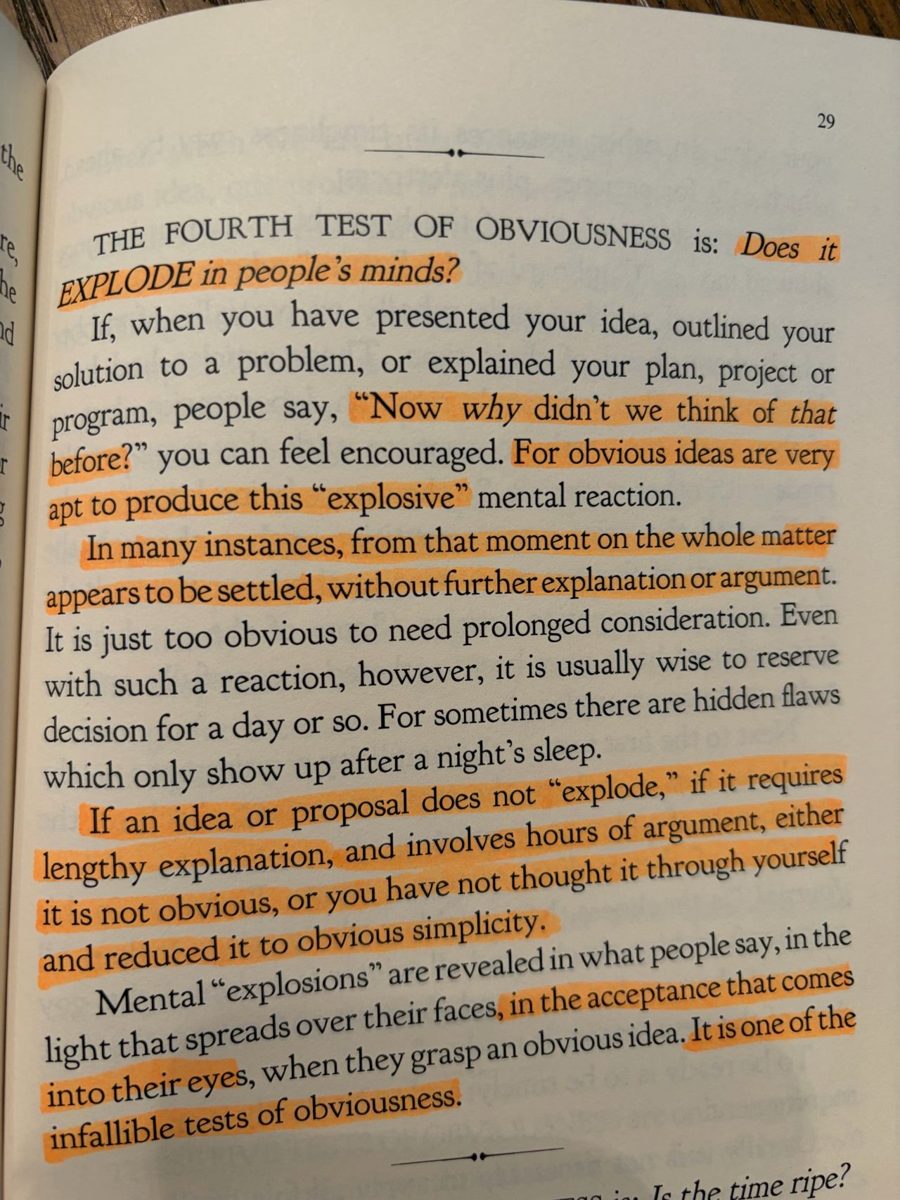
I’ve been reading Obvious Adams by Robert R. Updegraff, a little-known marketing classic originally published more than 100 years ago.
And one question from the book stopped me in my tracks:
“Does it EXPLODE in people’s minds?”
What an incredible test for a great idea.
We’ve somehow convinced ourselves that complexity is a sign of sophistication.
More slides. More frameworks. More explanation. More justification.
But the best ideas I’ve seen in marketing have almost the opposite effect.
Someone hears them and immediately says:
“Why didn’t we think of that before?”
That’s the magic.
An idea that feels surprising for about three seconds and then completely obvious.
And I think there’s a really important lesson here for marketers and leaders.
If you need 30 minutes to convince someone your idea is brilliant, you might not have finished thinking about it.
The hard work isn’t making an idea sound smart.
It’s doing enough thinking to make the idea feel simple.
Great marketing ideas often feel obvious in hindsight. But getting to that level of simplicity is incredibly hard.
The goal isn’t to make people think you’re brilliant. It’s to make them wonder why they didn’t think of it first.
Sharing the actual page below. More than a century later, this advice is as relevant as ever.
This is what great marketing looks like. And it has almost nothing to do with marketing.
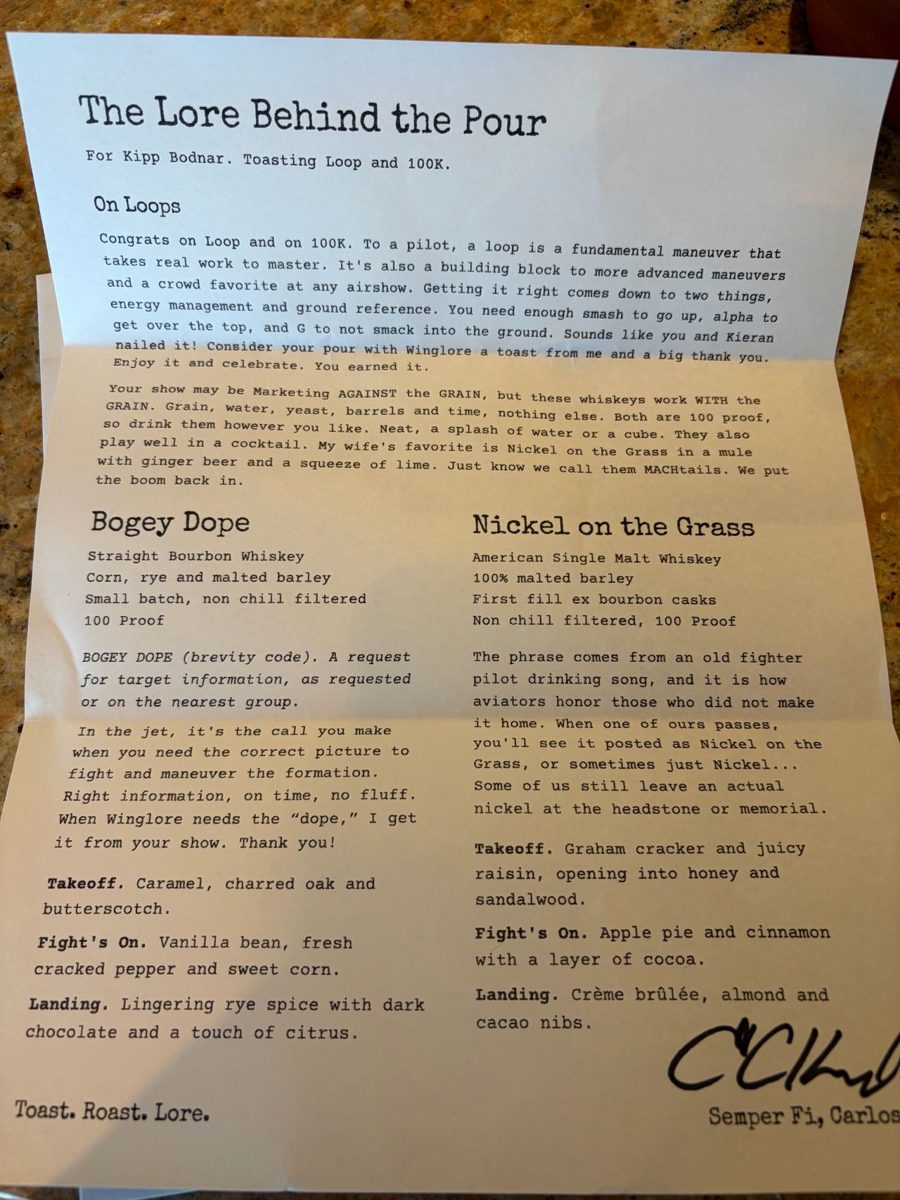
A few weeks ago, I got a LinkedIn message from E. "Carlos" Howard a former Marine fighter pilot turned whiskey entrepreneur.
He told me he’d been watching our videos and offered to trade a couple of bottles of his Winglore whiskey for a signed copy of my book.
Of course I said yes.
But what showed up at my house was a masterclass in marketing.
Two personally signed bottles. Beautiful packaging. Branded glasses. A hat. And an incredible, personalized letter.
Not some generic thank-you note.
Carlos had done his homework.
He referenced my show, Marketing Against the Grain. He tied his background as a fighter pilot to our celebration of Loop and 100K. He explained the stories behind the names of his whiskeys. Even the tasting notes followed an aviation theme: Takeoff, Fight’s On, Landing.
Every detail reinforced his brand and made the experience memorable.
This is Loop Marketing in the wild.
Carlos didn’t have a massive advertising budget or a complicated campaign.
He did something far more powerful:
He expressed a distinctive brand with an authentic story.
He tailored the experience to an audience of one.
He amplified his brand by creating something worth talking about.
And now I’m doing exactly that. Sharing his story with all of you.
That’s the magic of great marketing. The best marketing doesn’t feel like marketing. It feels like someone genuinely cares.
We spend so much time talking about AI, automation, scale, and efficiency.
All important.
But technology should make it easier to create moments like this, not replace them.
The goal isn’t to reach more people with forgettable marketing. It’s to create experiences people can’t help but share.
Carlos, thank you for the whiskey, the incredible attention to detail, and the reminder of what building a great brand is all about.
You’ve earned a customer, an advocate, and a fan.
P.S. The Winglore branding is very well done. Look at these photos. My friends and family are fighting over the hats!