Understory ranks No. 140 on Inc. 5000 list of fastest-growing companies in U.S. Read more about Understory on the 2026 Inc. 5000 list

Updated every week

B2B thought leaders worth reading

The founders and executives at B2B software companies whose LinkedIn posts land. Their best posts in full, the opening lines that worked, and what actually gets reactions, measured.

  • Marc Benioff
  • George Kurtz
  • Varun Anand
  • Olivier Pomel
  • Todd McKinnon
  • Stephen Lynch
  • Tomer Weingarten
  • Dharmesh Shah
  • Paddy Srinivasan
  • Eoin Hinchy
  • Josh Kanagy
  • Ken MacAskill
  • Henry Schuck
  • Jyoti Bansal
  • Henry Ward
  • Amit Bendov
  • Tom Eggemeier
  • Chuck Ganapathi
leaders
121
companies
65
recent posts read
2,906
industries
4

How we pick them

  1. 1Find the peopleThe founders and executives of 65 B2B software companies, the same companies in our ad libraries.
  2. 2Read every post2,906 recent public LinkedIn posts, re-read every week, each tagged by theme, opening line and format.
  3. 3Keep what lands and teachesA post is featured only with 100 reactions or more and real substance. No job announcements, no congratulations bait.

Everyone is ranked by the reactions on their typical (median) post, so steady writers rank above one viral moment.

  • Marc Benioff#1
    Marc BenioffChair & CEO at Salesforce
    typical post
    1.9K
    followers
    300K+
  • Varun Anand#3
    Varun AnandCo-Founder & Head of Operations at Clay
    typical post
    503
    followers
    67K+
  • Dharmesh Shah#5
    Dharmesh ShahFounder and CTO at HubSpot
    typical post
    335
    followers
    1.2M+
  • Josh Kanagy#6
    Josh KanagyChief Revenue Officer at Hightouch
    typical post
    246
    followers
    10K+
  • Henry Schuck#7
    Henry SchuckCEO & Founder at ZoomInfo
    typical post
    230
    followers
    100K+
  • Henry Ward#9
    Henry WardCEO at Carta
    typical post
    197
    followers
    30K+
  • Amit Bendov#10
    Amit BendovCEO and Co-Founder at Gong
    typical post
    186
    followers
    60K+
  • Tom Eggemeier#11
    Tom EggemeierCEO and Member of the Board at Zendesk
    typical post
    185
    followers
    47K+
  • George Kurtz#1
    George KurtzPresident / CEO & Founder at CrowdStrike
    typical post
    1.6K
    followers
    120K+
  • Todd McKinnon#2
    Todd McKinnonCEO & Co-Founder at Okta
    typical post
    453
    followers
    38K+
  • Tomer Weingarten#3
    Tomer WeingartenCo-founder & CEO at SentinelOne
    typical post
    371
    followers
    27K+
  • Eoin Hinchy#5
    Eoin HinchyFounder and CEO at Tines
    typical post
    258
    followers
    18K+
  • Ken MacAskill#6
    Ken MacAskillCEO - Interim at Snyk
    typical post
    244
    followers
    2.8K+
  • Christina Cacioppo#11
    Christina CacioppoCofounder and CEO at Vanta
    typical post
    171
    followers
    50K+
  • Bryan Palma#12
    Bryan PalmaPresident & Chief Executive Officer at KnowBe4
    typical post
    140
    followers
    33K+
  • Adam Markowitz#13
    Adam MarkowitzCo-Founder & CEO at Drata
    typical post
    130
    followers
    19K+
  • Olivier Pomel#1
    Olivier PomelCo-founder, CEO at Datadog
    typical post
    489
    followers
    18K+
  • Stephen Lynch#2
    Stephen LynchChief Executive Officer at Algolia
    typical post
    372
    followers
    4.7K+
  • Paddy Srinivasan#3
    Paddy SrinivasanChief Executive Officer at DigitalOcean
    typical post
    324
    followers
    8.2K+
  • Twilio#4
    Thomas WyattChief Operating Officer at Twilio
    typical post
    282
    followers
    6.3K+
  • Jyoti Bansal#5
    Jyoti BansalCEO & Co-Founder at Harness
    typical post
    230
    followers
    100K+
  • Karri Saarinen#7
    Karri SaarinenCEO, Cofounder at Linear
    typical post
    166
    followers
    66K+
  • Arquelle Shaw#11
    Arquelle ShawPresident, Equinix Americas at Equinix
    typical post
    123
    followers
    8.3K+
  • Anthony Woods#12
    Anthony WoodsCo-Founder at Grafana Labs
    typical post
    112
    followers
    2.4K+
  • Jeff Hoffmeister#1
    Jeff HoffmeisterChief Financial Officer at Shopify
    typical post
    131
    followers
    3.4K+
  • Jess Hertz#2
    Jess HertzChief Operating Officer at Shopify
    typical post
    116
    followers
    10K+
  • Elias Torres#3
    Elias TorresChief Product Officer at Klaviyo
    typical post
    106
    followers
    38K+
  • Aj Orbach#4
    Aj OrbachCo-Founder at Triple Whale
    typical post
    106
    followers
    10K+
  • Archana Rao#5
    Archana RaoEVP and Chief Information Officer at Klaviyo
    typical post
    92
    followers
    1.3K+
  • Jamie Domenici#6
    Jamie DomeniciCMO at Klaviyo
    typical post
    80
    followers
    11K+
  • Przemek Czarnecki#7
    Przemek CzarneckiField CTO, EMEA at Shopify
    typical post
    74
    followers
    5.2K+
  • Maxx Blank#8
    Maxx BlankCo-Founder & President at Triple Whale
    typical post
    40
    followers
    7.2K+
The data

What gets reactions on B2B LinkedIn

Every recent post from these leaders, tagged by format, opening line and theme, and measured in reactions per 1,000 followers, so a big account doesn't win just by being big.

By format

Posts with several images draw 2.5x the reactions of text-only posts, per follower.

  • Several images14.7
  • Image12
  • Video8.2
  • Document carousel7.5
  • Text only5.9

Median reactions per 1,000 followers, across 2,906 recent posts.

By opening line

Posts that open with an announcement draw 2.3x the reactions of posts that open with a contrarian take.

  • An announcement9.6
  • A story in progress9
  • A number or hard fact8.6
  • A plain statement of a view7.3
  • A question6
  • A contrarian take4.2

Median reactions per 1,000 followers, across 2,892 recent posts.

By theme

Posts about personal stories draw 3.8x the reactions of posts about advice and playbooks, per follower.

  • Personal stories18.1
  • Company news10
  • Team and hiring8.5
  • Leadership8.2
  • Events and content6.5
  • Industry analysis6.3
  • Customers5.6
  • Advice and playbooks4.8

Median reactions per 1,000 followers, across 2,906 recent posts.

Swipe file

Opening lines that worked

The first line decides whether anyone reads on. These opened substantive posts that drew 100 reactions or more, one per person.

  1. Henry Schuck

    “In 2009, we were building ZoomInfo out of a strip mall in Washington. I felt like such a LOSER next to Silicon Valley companies and remember thinking:”

    Henry Schuck, ZoomInfo·3.1K reactions·A story in progress

  2. Tim Sanders

    “I have not seen this much curiosity and FUD since 25 years ago, when the rise of the internet disrupted marketing at every level.”

    Tim Sanders, G2·1.8K reactions·A plain statement of a view

  3. Amit Bendov

    “Got a reference call last week. A CEO was looking at someone who used to work for me for a leadership role. Easy call. I gave her a strong yes.”

    Amit Bendov, Gong·1.7K reactions·A story in progress

  4. George Kurtz

    “As defenders, you need to look at your watch, not a calendar.”

    George Kurtz, CrowdStrike·1.7K reactions·A plain statement of a view

  5. Kareem Amin

    “Our new product, Clay Ads, is officially live! In two months, our growth team dropped LinkedIn CPL from $250 to $25. Here's how:”

    Kareem Amin, Clay·1.2K reactions·An announcement

  6. Elias Torres

    “All week, people have been texting me congratulations. A few added: "I'm sure it comes with mixed emotions."”

    Elias Torres, Klaviyo·861 reactions·A story in progress

  7. Dharmesh Shah

    “I talked with Joe Schmidt IV on the Andreessen Horowitz podcast to talk about the opportunities in software and why I'm so excited.”

    Dharmesh Shah, HubSpot·823 reactions·A plain statement of a view

  8. Duncan Lennox

    “HubSpot is headless, and I wrote about how we plan to price it.”

    Duncan Lennox, HubSpot·805 reactions·An announcement

  9. Avery Pennarun

    “One of the best signs that Tailscale is becoming a platform is when someone integrates it without talking to us first.”

    Avery Pennarun, Tailscale·511 reactions·A plain statement of a view

  10. Jaleh Rezaei

    “43% win rate. We kept losing deals to “no budget.””

    Jaleh Rezaei, Mutiny·478 reactions·A number or hard fact

  11. Tom Eggemeier

    “Every company wants to rein in their AI spending, but that is hard to do by looking at token cost alone.”

    Tom Eggemeier, Zendesk·444 reactions·A plain statement of a view

  12. Brian Halligan

    “Nobody is born with a chip on their shoulder. Somebody puts it there.”

    Brian Halligan, HubSpot·419 reactions·A plain statement of a view

Questions

Who are the top B2B thought leaders on LinkedIn?

By the reactions a typical post draws, Marc Benioff (Chair & CEO at Salesforce), George Kurtz (President / CEO & Founder at CrowdStrike), Varun Anand (Co-Founder & Head of Operations at Clay), Olivier Pomel (Co-founder, CEO at Datadog) and Todd McKinnon (CEO & Co-Founder at Okta). The lists by industry rank everyone else.

What kind of LinkedIn posts get the most reactions in B2B?

Posts with several images draw 2.5x the reactions of text-only posts, per follower. Posts about personal stories draw 3.8x the reactions of posts about advice and playbooks, per follower.

How should a B2B LinkedIn post open?

Posts that open with an announcement draw 2.3x the reactions of posts that open with a contrarian take.

How is this list made?

We find the founders and executives of B2B software companies on LinkedIn and read their recent public posts every week. A post is featured only if it drew 100 reactions or more and says something a peer would learn from, so no job announcements or congratulations bait. Anyone with such a post is in, ranked by the reactions on their typical (median) post.

We start from the companies in our B2B ad libraries, so you can see both what a company says in its ads and what its leaders say in their own words.

Want your name on this list

We ghostwrite LinkedIn posts for B2B founders and executives, in their own voice, and turn the audience into pipeline.

The feed

Every post worth reading

All 294 featured posts, in full, most reacted first and never two from the same company in a row. Click any post to open it on LinkedIn.

Varun Anand
Varun AnandCo-Founder & Head of Operations at Clay
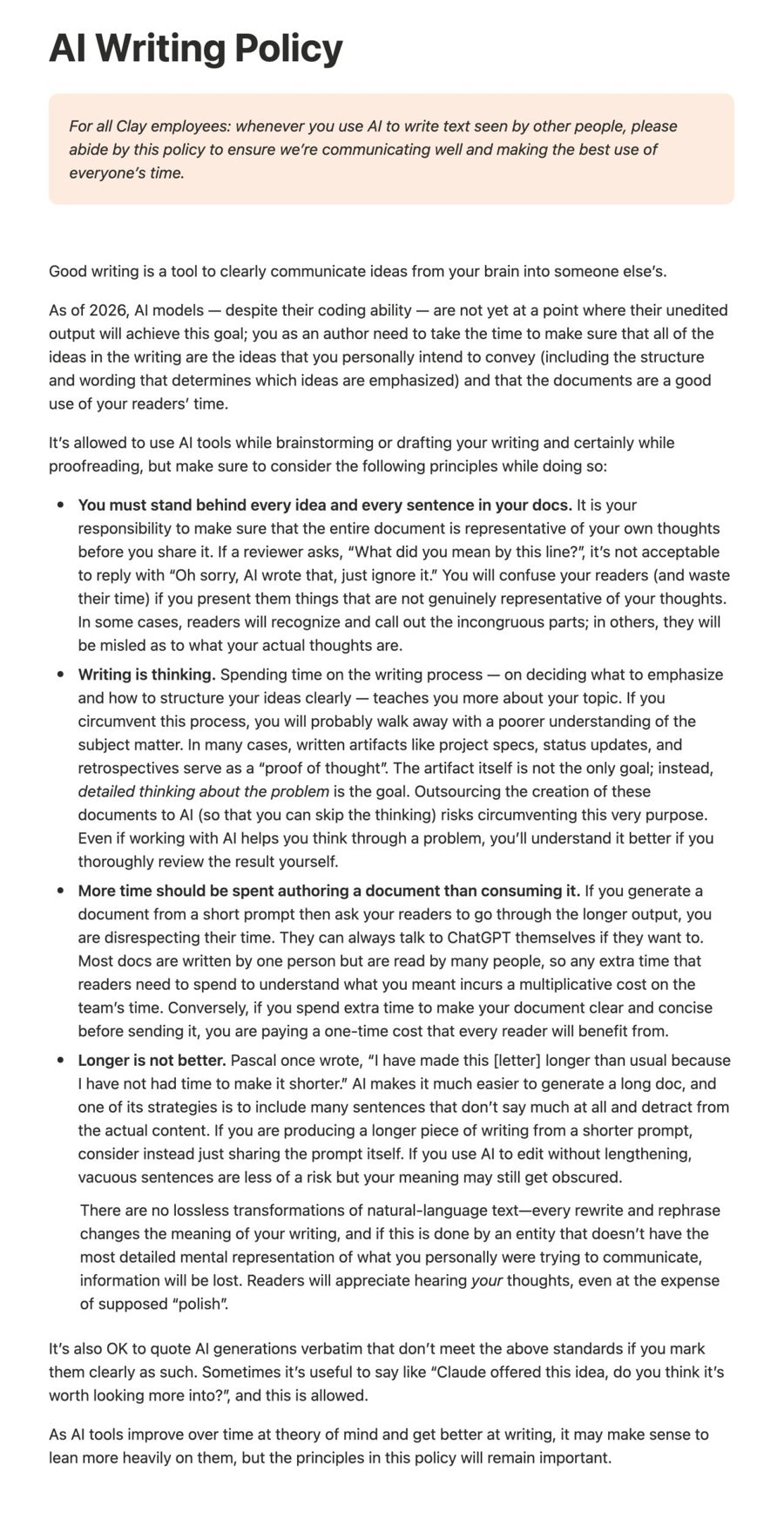
We just instituted an official AI Writing Policy at Clay. Massive thanks to Sophie Alpert on our engineering team who wrote this. Originally this was just for eng, but other teams found it so helpful we expanded it company-wide. Here are the four guiding principles: 1. You must stand behind every idea and sentence It is your responsibility to make sure that the entire document is representative of your own thoughts before you share it. 2. Writing is thinking Spending time on the writing process teaches you more about your topic. If you circumvent this process, you will walk away with a poorer understanding of the subject matter. 3. More time should be spent writing a document than consuming it If you generate a document from a short prompt then ask your readers to go through the longer output, you are disrespecting their time. They can talk to ChatGPT themselves if they want to. 4. Longer is not better AI makes it easy to generate long docs, and it loves padding them with sentences that say nothing. If you're producing docs from a short prompt, consider just sharing the prompt. You can read (and borrow) the full policy below. Hopefully we all communicate a bit more clearly now :)
Image from Varun Anand's LinkedIn post
George Kurtz
George KurtzPresident / CEO & Founder at CrowdStrike
I read Dario Amodei's essay calling on the labs to pace the frontier. Sam Altman agreed. The frontier will move at whatever speed it moves. The rest of the world will not slow down. Our job in the cybersecurity community is to make sure it moves securely and safely. Here’s what I see from the front lines: 1. The unit of threat is no longer the hacker. It's an autonomous campaign. I call it the Agent-state. We see coordinated AI agents executing attack campaigns at machine speed. 2. Sophistication is dead as an attribution signal. AI gives every criminal and lone actor elite execution. Identity, infrastructure, and intent tell you who's behind an attack. Skill doesn't. 3. Runtime is the control point. Endpoints, cloud workloads, and SaaS are the battleground. Governance documents don't stop an agent in motion. Enforcement at machine speed does. 4. Every AI agent is a privileged identity. Least privilege, short-lived credentials, traceable actions, and a kill switch. Permissions never expand because an agent decides it needs more. 5. Defense has to be autonomous but also bounded. Machine-speed response, tiered by consequence, with humans owning the high-impact calls. 6. Every failed attack should make every defender smarter. Feed what we block back into detection, across customers and models, with privacy intact. This is what CrowdStrike and NVIDIA introduced with SafeMind: an agentic, always improving model and harness protection system built for defenders. 7. The AI industrial base is critical infrastructure: weights, training clusters, APIs. Call it what it is and protect it like it is. Pacing what comes next doesn't secure what's already here. The credible path is to deploy with proof: board-level accountability for AI security, independent external red teaming, incident disclosure, secure defaults, and controls that work in production - not on paper. Anthropic and OpenAI just committed to embedding independent evaluators with employee-level access. CrowdStrike will bring what we see from the front lines to that table. The ability for AI to act must be matched by the ability for defensive AI to stop the breach. https://lnkd.in/ggY5edWX
Tim Sanders
Tim SandersChief Innovation Officer at G2
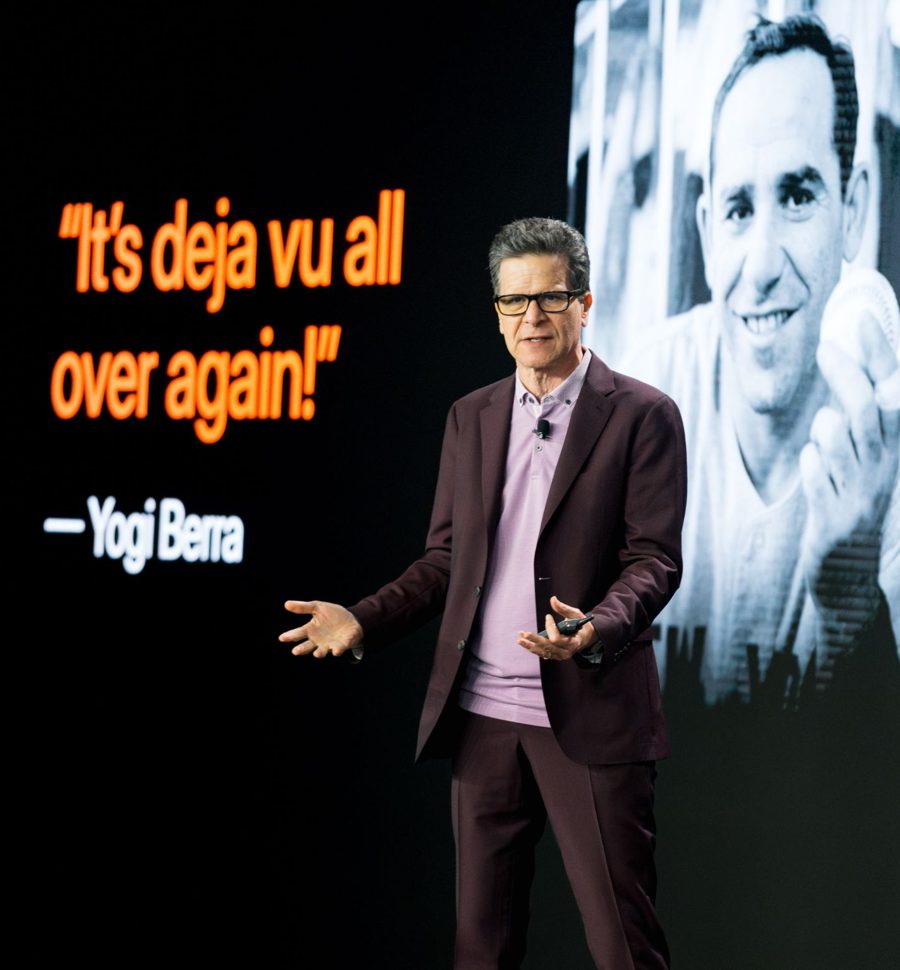
I have not seen this much curiosity and FUD since 25 years ago, when the rise of the internet disrupted marketing at every level. To quote the philosopher Yogi Berra: "It's deja vu all over again." This was the opening line of my keynote last week at the Zero Click by Profound conference in NYC. My point was that we are in a familiar place of unsettled uncertainty because of the rise of AI search. We are filled with existential angst, and at the same time, playing a guessing game of tactics. Take the current obsession with citations. We track them relentlessly, and throw parties when they rise and lose sleep when they flatline. But really, a citation is just a link to one of our website pages, often appearing as a tiny gray box at the end of a paragraph in a chat return, many times one of several links the user has to scroll through to click through. Not really visibility at all. Not many clickthroughs UNLESS they are tied to a "your money, your life" AI claim that users feel the need to validate. "Citations are the new eyeballs. And the dotcom crash was littered with companies that should have been figuring out revenue attribution instead of measuring eyeballs and hits to a page." That line from my keynote connected with seasoned marketers, who have started to get the itch that they need to find a higher weighted success metric for AEO. While vendors are working away on a product that could actually tell you if you won the answer (made the shortlist, won the shootout) ... you can still find heuristics to measure your content and trust signal investments today. 🧐 Have Inbound BDRs find out if the prospect found you by chat and if you were recommended. 🗺️ Ask your AEO provider to start measuring "citation position" with an emphasis on your citations that appear at the bottom of the return (where the recommendations live.) 🧠 Use CloudFlare data to measure traffic coming to your website directly from chat, especially if that traffic is seeking pricing, contact or product pages. One other way you can do this if you are in B2B software is to measure traffic coming to your G2 profile/product page where your reviews live ... a sure sign that the citation was tied to a recommendation and not just a clever piece of content you wrote that landed you early in the return (before the recommendation.) Much like 25 years ago, there is still a lot of nuance to how you can respond to disruption. But what you can do, and I saw it first hand back in the day, is ask harder questions and stop accepting comfort metrics as your source of truth. Much love to James Cadwallader, Trevor Pyle, Nick Lafferty, Eliott Lee, Katherine Underwood at Profound for inviting, me, prepping me for success and giving me the leash to close out my talk with a screed about the power of Love.
Image from Tim Sanders's LinkedIn post
Kareem Amin
Kareem AminCofounder/CEO at Clay
Our new product, Clay Ads, is officially live! In two months, our growth team dropped LinkedIn CPL from $250 to $25. Here's how: Exclusion lists that auto-sync to Salesforce so ads only reach people who can actually buy. If you’re an existing customer, open opp, or partner, you won’t see our ads. This is by design! Meta became a real B2B channel for us too. Work emails rarely match personal profiles, so most B2B teams skip it entirely. Clay enriches contacts with personal emails before audiences ever hit the platform. 60%+ match rates. And one recent campaign generated 200 leads at $10 each within 24 hours. And the audiences stay fresh on their own. When someone becomes a customer, they stop seeing your ads the next day. When sales shifts priorities, targeting shifts with them. This all happens automatically, across both platforms. No CSV exports or manual rebuilds. We're hosting a live workshop tomorrow showing exactly how we built it! Link below :)
Tim Sanders
Tim SandersChief Innovation Officer at G2
Trust is built one shared experience at a time. This was my takeaway last week, after spending a few days with the G2 London team. It was my first trip across the pond since joining G2 in 2024. During three days, I met with customers and spent quality time with the local sales and management team. That definitely went a long ways to "get the penny to drop" on how they could leverage me going forward. But really, it was our common passion for the England national team that glued us all together as a unit. For 20 years, I've loved the English team and cheer for them at major tournaments. I even ponied up the dough to see England VS Croatia a few weeks ago at Dallas Stadium. I was there when we serenaded the team with a rendition of Wonderwall. So last Wednesday, the London office joined me at a pub to watch England in a knockout round match against DR Congo. It was a raucous experience. We were behind for a long time, finally leveled and then through the grace of Sir Harry Kane, qualified for the Round of 16 with a winning goal at the end. It was quite the range of emotions. We had a photo snapped of us at half-time, still uncertain if our team would win or not. I wanted to commemorate a relationship building week with the team that started all business, but ended up moving forward the most because we found a passion we could all coalesce around. This is how I think of culture building. Find an authentic connection between your passion and a passion of your people and you'll spark something greater than closing a deal, doing a favor or having a series of meetings. You'll bring out real human to human connection.
Image from Tim Sanders's LinkedIn post
Karri Saarinen
Karri SaarinenCEO, Cofounder at Linear
I took a break from paying attention to AI this summer. I thought I’d feel left behind when I came back. But coming back, I realized not that much had changed. There are new models, new techniques, new agents. But making great products, growing revenue, and building a business is still hard. The tools are clearly getting better. We can do more, faster. But I think the more important question is whether we’re making better things. Are our teams getting better, or are we just getting faster?I don’t think the answer is clearly yes. There’s a lot of focus on making tools, using tools, and building systems around them. But as product people, our job is still to make something great.
Marc Benioff
Marc BenioffChair & CEO at Salesforce
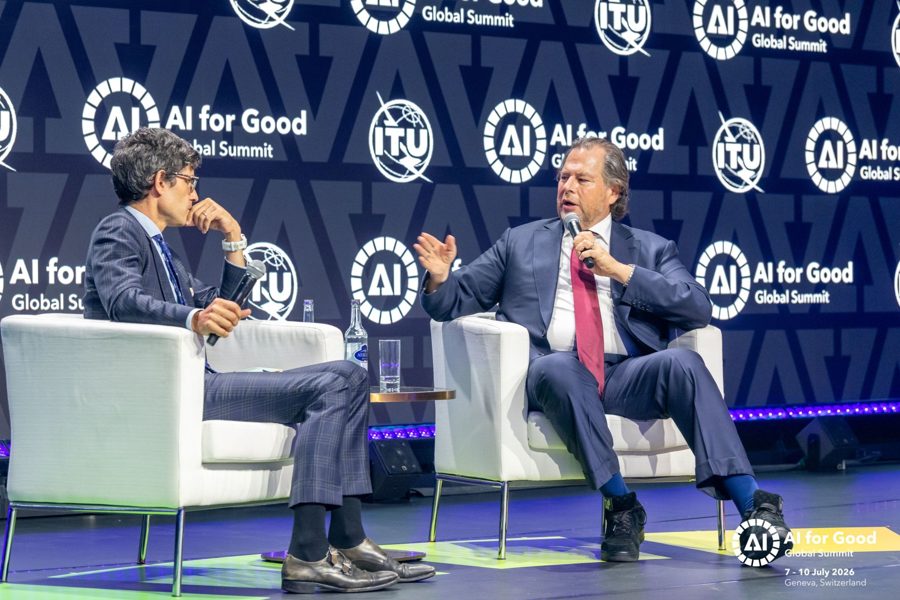
An incredible day of conversations and momentum at the AI for Good Global Summit. It was an honor to participate in the launch of the ITU AI for Good Global Commission alongside my co-chair, President Paul Kagame, and vice-chair, Doreen Bogdan-Martin. And it was great to be with Nicholas Thompson for a wide-ranging fireside chat on everything from the rise of autonomous agents to how companies must lead in the AI era. The message I kept coming back to all day is simple: This is a moment of profound responsibility. We cannot let AI become Social Media 2.0. Social media companies got a pass as children were hurt and society was damaged. That was just the warm-up act. We cannot afford to repeat those mistakes with AI. Every company must be held responsible for what they build. The pharmaceutical industry has strict liability frameworks if a drug harms people; AI must be no different. We cannot have ethics without real accountability. AI will only fulfill its extraordinary promise if we build it on a foundation of trust. As leaders, what we do next will define our legacies. Our values are what will bring value, and those values will determine how this technology unfolds. This is our opportunity, our obligation, and our shared responsibility. Thank you, Doreen, for bringing us all together and for championing AI for Good.
Image from Marc Benioff's LinkedIn post
George Kurtz
George KurtzPresident / CEO & Founder at CrowdStrike
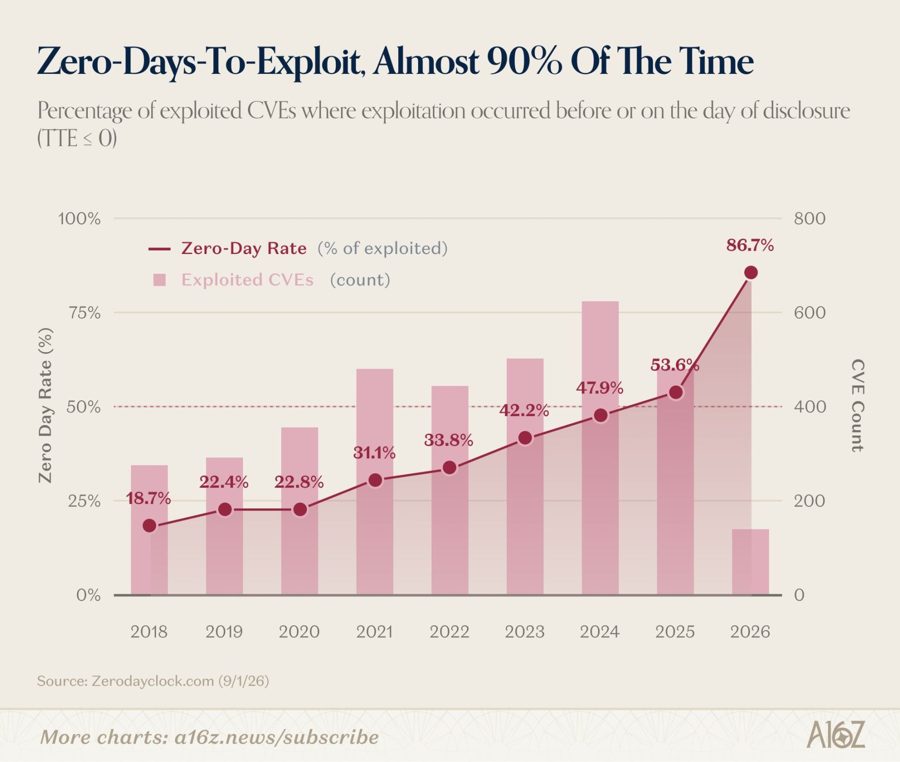
As defenders, you need to look at your watch, not a calendar. PHP2Shell is a big one. Here are my takeaways.   1. These flaws reach back more than a decade. PHP’s maintainers identified one underlying problem in 2024, but its full impact wasn’t clear until AI-assisted research demonstrated its exploitability. What seems impractical to exploit today could easily be exploitable tomorrow as models advance. 2. Much of the web runs on PHP, and a lot of it is on versions that are out of support. Some get a source backport you must build yourself. Some get nothing. Attackers aren't hunting the servers you just patched. They're hunting the ones you forgot you own. There is going to be a very long tail on remediating these vulnerabilities, and we will see many downstream breaches over the coming months.   3. The patching window has completely collapsed. While we’ve exponentially found more vulnerabilities and exponentially created more patches, we’ve hit the sound barrier on operationally rolling them out. Even more concerning is the increase in exploitation occurring before or on the day of disclosure. When a flaw gets exploited, almost 90% of the time it’s hit on or before the day it’s disclosed.  4. Coordinated disclosure in open source is really hard. It runs on trust, not contracts. There were many people in the loop, and for good reason. Lots of great people doing incredible work. However, I expect leaked disclosures will be the norm, not the exception, as we move forward in the Agent-state era. CrowdStrike has coverage in place to protect customers. Patching and upgrading vulnerable PHP versions should be the immediate priority.  https://lnkd.in/gsbDqirR The Andreessen Horowitz chart below says it all.
Image from George Kurtz's LinkedIn post
Henry Schuck
Henry SchuckCEO & Founder at ZoomInfo
In 2009, we were building ZoomInfo out of a strip mall in Washington. I felt like such a LOSER next to Silicon Valley companies and remember thinking: “Why doesn’t our business look like that??” “Why isn’t Sequoia invested in us?” “Why aren’t we growing as fast as they are?” They had so much hype and great VCs. Box and Dropbox were raising round after round and getting all the press. Meanwhile we were working out of our first “global HQ” - a tiny office in a seedy part of town. The carpet was stained, the ceiling tiles were cracked, and there were no windows. The front door didn’t even close all the way. We didn’t have an IT team, so I ran the wiring myself. But we were growing profitably and had a chip on our shoulder bigger than the Bay Area. We also hadn’t raised a dollar. Kirk and I put $25K each on our credit cards to start the company in 2007, and we didn’t take outside money until 2014, when we were at about $30M in ARR. I was really hard on myself during those years. I’d look at who was getting funded down in the Valley and think, are we just dumbasses? Is everyone else doing this right and we’re the ones doing it wrong?? Looking back, not having that money was one of the best things that happened to me. I was 23 when we started. If someone had handed me $40M back then, I would have made a TON of bad decisions with it. Instead, every dollar we spent came from a customer, so we had to figure out which dollars actually worked. And I got 7 years to grow up as a leader before anyone gave us real money. It’s hard not to compare yourself. We all do it. If I could tell my 23-year-old self one thing, it would be to stop worrying about what other companies are doing. You’re building your own thing, and it’ll get rewarded.

Image from Henry Schuck's LinkedIn post
Dharmesh Shah
Dharmesh ShahFounder and CTO at HubSpot
Notes From the HubSpot Refounding, Day 1: Yesterday (November 12th, 2026), Brian Halligan came back as CEO of HubSpot and we declared that it was the refounding of HubSpot. You can get to the original post by visiting refounding .com. Here are some thoughts/notes for those following along at home, that are curious: 1) Yesterday, we had an all-hands meeting (I've stopped calling it the "all-minds" meeting because that term never stuck). We did it live from Brian's place. I opened and then passed it to Brian who did the main presentation. I've seen Brian give a *lot* of presentations. He's very good at it. This was one of his better ones. I live-Slacked his presentation in the company Slack channel while he was giving his presentation a few feet away. It was fun -- and funny (I hope). There were hundreds of people posting to Slack live. It wasn't just me. People loved the presentation. Really positive response. The energy was palpable. HubSpot is ready for a refounding. I'm excited! 2) A common question we've gotten from folks in the community: "What does refounding mean? What will actually change?" We are reimagining, rethinking *everything*. The core question we're asking ourselves is: "Selves, if we were starting HubSpot today, knowing what we know, what would we do?" To start with, we're sharpening the product vision. We are leaning strongly into a headless version of HubSpot. This means that an increasing amount of HubSpot's capabilities will be consumable by AI agents and AI harnesses (like Claude and ChatGPT) via MCP. We're shifting significant resources towards that vision. It's how people increasingly want to use/access HubSpot and we hear that loud and clear. 3) After the presentation, Brian and I had a celebratory founders' dinner. Talked about a lot of things. But there's one overarching thing. We both agreed that we should BE BOLD. Take risks and don't hold back from necessary change and short-term sacrifice as long as we think it Solves For The Customer long-term. So, we are now on Day 2. Stay tuned for more updates. If you have questions, comments or feedback, just drop them in the comments. Cheers. #HubSpotRefounding

Image from Dharmesh Shah's LinkedIn post
Amit Bendov
Amit BendovCEO and Co-Founder at Gong
Got a reference call last week. A CEO was looking at someone who used to work for me for a leadership role. Easy call. I gave her a strong yes. Then he asked: “We sell into a very specific industry. How much weight do you put on industry experience?” My answer: very little. Drive and smarts matter more than industry experience every single time. Not sometimes. Every time. Yes, the leader with the domain background ramps faster. Then the curve flips. The smart, driven person has learned the industry by then, and keeps climbing. The experienced person stops where their experience stops. I’ve seen this play out at Gong over and over. Many of our most successful people started with very little experience. Some with none. What they had was drive, and the smarts to learn fast. She can hire a few people from the industry. Hang out with customers. Get an industry advisor. Use AI. Probably all of the above. Industry knowledge is something you can buy. Drive and smarts are not. Sure, sometimes experience is key. I wouldn’t let a dermatologist do my root canal. But a revenue leader learning a new vertical is not a root canal. It’s a 6-12 months of homework. In short: engine over map. Best of luck! 😎

Karri Saarinen
Karri SaarinenCEO, Cofounder at Linear
People keep asking how companies like Ramp, Linear, and Anthropic ship so much software with agents. There is no new SDLC or secret set of tools. The tools are increasingly available to everyone. You can build your own, use Linear, Claude, or whatever works. The bigger difference is ambition. These companies encourage their teams to build more, experiment more, and let agents do more of the work. That's the main different between "AI native" or not. You try to use the technology to the max. But don't get there by adopting a tool, you change your beliefs. So in the very simplest way: - let agents build - automate what you can - make it easier and faster to contribute - increase the ambition of what your teams attempt. In practice, that means things like: - Standardize around cloud agents. Most of our code (5M lines last quater) is now written in Linear with our Linear cloud coding agent. Cloud sandboxes make standardizing the system and environment easier for everyone and enables faster contributions - Linear agent (with code access and cloud agent) operates in Slack too. If there is a discussion or someone notices a problem just say "@linear fix this" (decrease the time from something noticed to fixed) - As bugs, errors etc arrive in Linear, send them to Triage, and have Loop to auto-investigate (connect to tools like Sentry, Datadog), and write a fix - Let designers, PMs, non-technical people contribute code where useful. If they notice a problem, tell them they can submit a fix. If they want to try something, ask them to build a prototype. - Set up code review agent and systems to make sure PRs are safe to merge. - Run security as an automation, have agents constantly try to find security issues in your codebase, as they find, send it to a coding agent - Instead of working on issue level, increase ambition, make a whole project, ask the agent to ask questions, investigate code base, create issues and have the agent work on the whole project at once. - Bring customer feedback to the system like Linear, and make it available. At Linear every project now starts with 10-500 customer notes that influence the direction of the work, and which customers we should ask to test the solution first. - Set up Loops/automations to constantly update reference documents for agents, like product area/code owners so work can be routed to right humans Then what is left is how do you set direction for your teams (initiatives, projects they should work on) and how do you review results (better code review, Linear does it with Guided Reviews), how you maintain quality/cohesion which is not a new problem either. At @linear we can help with automation, cloud agents, and code review, customer feedback and planning bits. But we can't change your mindset or how your company operates. If your company is still spending energy debating jira workflow steps, you're probably solving the wrong problems.
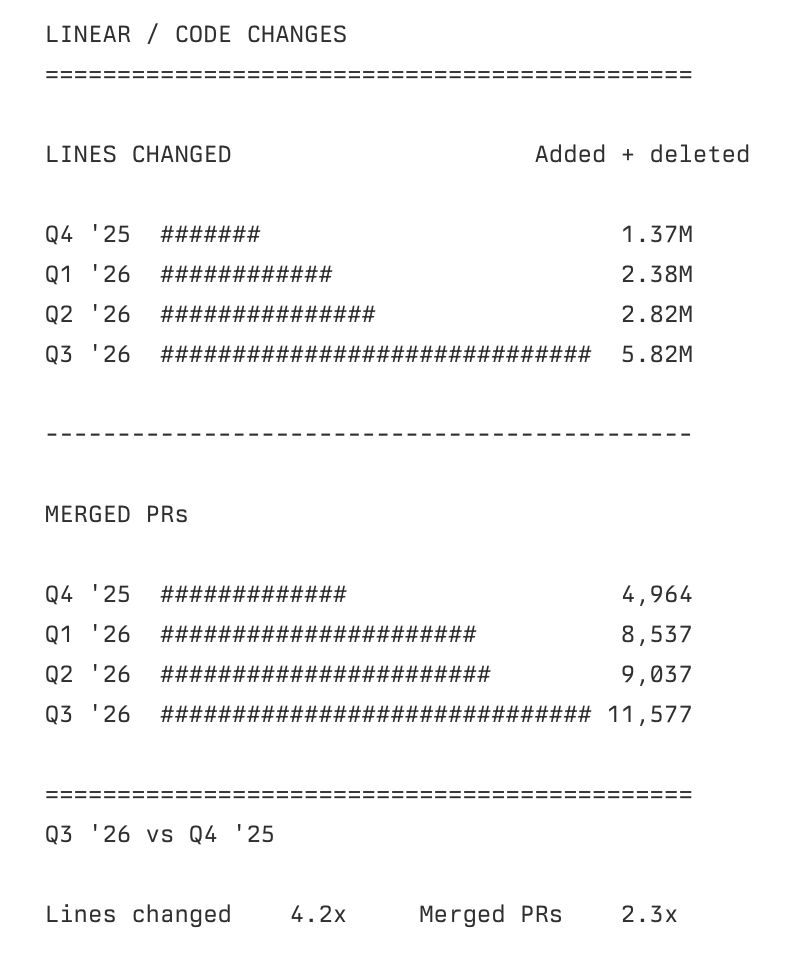
Image from Karri Saarinen's LinkedIn post