

Understory ranks No. 140 on Inc. 5000 list of fastest-growing companies in U.S. Read more about Understory on the 2026 Inc. 5000 list

Alex Ionescu

Alex Ionescu

Chief Technology Innovation Officer at CrowdStrike

Montreal, Quebec, Canada · Cybersecurity · LinkedIn profile

Alex Ionescu is Chief Technology Innovation Officer at CrowdStrike, based in Montreal. On LinkedIn Alex writes mostly about company news and events and content, most often as text posts.

7.4K+followers
207reactions on a typical post
369reactions on the best post
2 of 6recent posts worth featuring

Alex's best LinkedIn posts

Recent posts that drew 100 reactions or more and say something a peer would learn from, most reactions first. Click any post to open it on LinkedIn.

Alex Ionescu
Alex IonescuChief Technology Innovation Officer at CrowdStrike
People sometimes ask me about an 8th Edition of Windows Internals. Today I want to show you why I think we might never need one. I pointed Claude at two things: the scheduling chapter from the 7th Edition, and an IDA/HexRays database I had lying around for the Windows 11 24H2 kernel. I asked it to "read all the scheduler code, then read the book, and tell me what needs updating." What it came back with genuinely impressed me. It identified 12 major areas where the kernel's scheduler has changed since the 7th Edition was written (which covered Windows 10 circa Redstone 3). Things like SMT isolation scheduling (core-level scheduling for side-channel mitigations), a new multi-processor atomic rescheduling mechanism, a full RCU implementation in the Windows kernel (!), soft-parking with ranked-choice elections for processor unparking, Hyper-V integrated scheduler support for VP backing threads, and significant expansions to heterogeneous (big.LITTLE / Intel hybrid) scheduling with a new QoS-based preemption swap system. For each area, it produced book-quality prose — with the same depth and style as the existing chapter — complete with figures, experiments (with actual WinDbg commands), sidebars, and explanations of the algorithms. It wasn't perfect. I caught it hallucinating a global variable name that doesn't exist in the binary. Each time I pointed out an issue, it fixed it immediately and learned for the next section. The result is a ~12,000-word manuscript update with 14 diagrams, 7 hands-on experiments, and coverage of every significant scheduler change between RS3 and 24H2. It's rendered as a clean, printable HTML document that I exported as a PDF here. The whole process took one afternoon. To be clear: I am NOT vouching for the accuracy of every detail. LLMs hallucinate, and I caught at least one instance. The writing, while remarkably good, isn't as polished as what a human author would produce after months of review. You'd still want a technical reviewer to go through it carefully. But here's the thing — it's good enough. Good enough that the delta between this output and a publishable chapter update is a few days of expert review, not the months or years it would take to write from scratch. And the process is repeatable: point it at the next build's IDB, and you get the next delta. The 7th Edition was published in 2021. Windows has had multiple major kernel revisions since then. The traditional publishing cycle simply can't keep pace with the rate of OS development. But an LLM with access to the decompiled code and the previous edition? That can. Maybe the 8th Edition isn't a book. Maybe it's a pipeline. #WindowsInternals #ReverseEngineering #LLM #AI #Windows11 #KernelDevelopment
Alex Ionescu
Alex IonescuChief Technology Innovation Officer at CrowdStrike
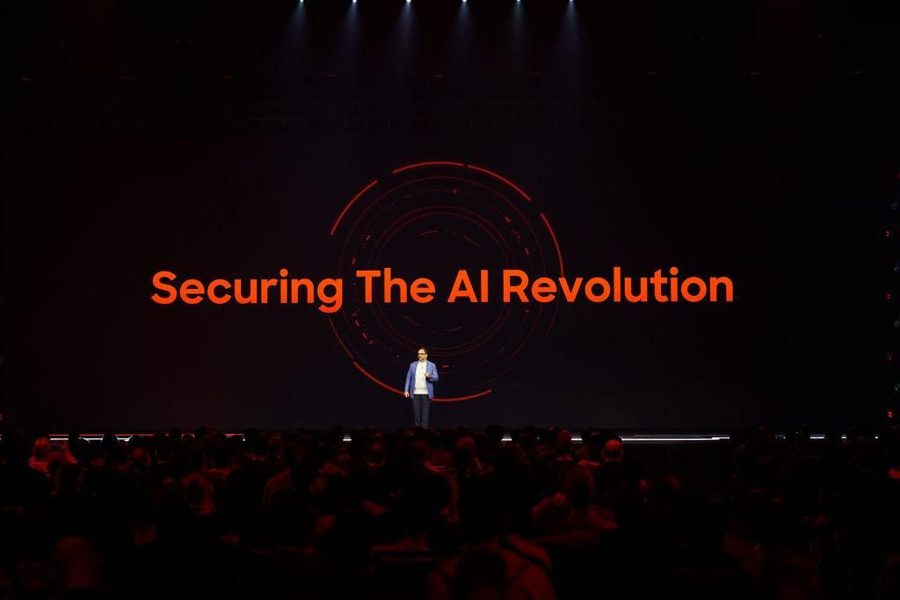
Fal.Con 2026 is a wrap! Thank you to everyone who joined Bartley Richardson and I for the closing keynote. After the amazing Falcon Fest party with the The Chainsmokers the night before, I know it was a long morning for everyone! I grew up with stage fright, so speaking to an arena of 10,000 customers and partners was not on my childhood bingo card. Our events team did a wonderful job setting this all up. Fifteen years ago, I helped build the original Falcon sensor. This week, I showed how it is evolving for the AI era. Last year, I talked about two shifts: endpoint security moving toward modern user-mode frameworks, and AI compute arriving on the endpoint. This year, the word that mattered was *delivered*. Windows Endpoint Security Platform: We showed Falcon continuing to block malware after an EDR killer removed its kernel callbacks. Then we showed Falcon preventing a signed, vulnerable driver from loading at boot without requiring a Falcon kernel driver. Not unbreakable. More resilient. A higher bar for the adversary. WESP remains in private preview, with our partners at Microsoft and CrowdStrike will be ready as their team brings the platform to general availability. Thank you to Kevin Sullivan for the ongoing support and engagement. Project Ascent and Modularity: Project Ascent modernizes the sensor’s foundation with standard protocols, delivery and management. Modularity gives Falcon capabilities cleaner internal boundaries so they can evolve independently, while preserving one sensor, one deployment package and one update process. We showed how that approach can protect contractor access through Falcon Seraphic Enterprise Browser without forcing a full endpoint stack onto an unmanaged device. AI inference on the endpoint: Our first local small language model is generally available in the latest Windows sensor release, running directly on the NPU thanks to our partnership with Intel, avoid precious compute cycles, and lowering power consumption. Thank you to Todd Cramer and Carla Rodríguez for their team's support on this project. In the demo, our SLM identified protected health information and stopped an upload to an unsanctioned cloud service. Classification happened locally. No cloud round trip. Sensitive data stayed on the endpoint. AI-enabled adversaries can produce variants faster than human-led processes can respond. Cloud intelligence remains essential, but defense also has to reason where attacks happen. That is where Bartley’s frontier AI work and the Falcon sensor meet: intelligence in the cloud, inference on the endpoint and protection at machine speed. Last year, I showed where endpoint security was going. This year, I showed the pieces running. The endpoint is central again. Now it can reason at inference speed. Thank you to our engineers, customers, partners and the entire crowd. #CrowdStrike #FalCon2026
Image from Alex Ionescu's LinkedIn post

What Alex posts about

  • Company news33%
  • Events and content33%
  • Industry analysis17%
  • Personal stories17%

What makes the best ones work

  • Most of Alex's best posts open with a plain statement of a view.
  • 50% of them carry a document carousel.
  • They run long, often past a thousand characters.

Questions about Alex Ionescu

Who is Alex Ionescu?

Alex Ionescu is Chief Technology Innovation Officer at CrowdStrike, based in Montreal. On LinkedIn Alex writes mostly about company news and events and content, most often as text posts.

What does Alex Ionescu post about on LinkedIn?

Mostly company news, events and content and industry analysis. Of the 6 recent posts we read, 2 drew 100 reactions or more with real substance.

What is Alex Ionescu's most popular recent LinkedIn post?

The one that opens “People sometimes ask me about an 8th Edition of Windows Internals. Today I want to show you why I think we might never need one.”, with 369 reactions and 18 comments.

Every post belongs to Alex Ionescu. Understory is not affiliated with Alex Ionescu or CrowdStrike. We read public LinkedIn posts to study what B2B leaders write and what their audiences respond to, and the bio is our own summary. If this is you and you would like the page changed or removed, email alex@understoryagency.com and we will do it.

More cybersecurity thought leaders

See every cybersecurity thought leader, or the ads CrowdStrike runs.

Want posts like these on your profile

We ghostwrite LinkedIn posts for B2B founders and executives, in their own voice, and turn the audience into pipeline.