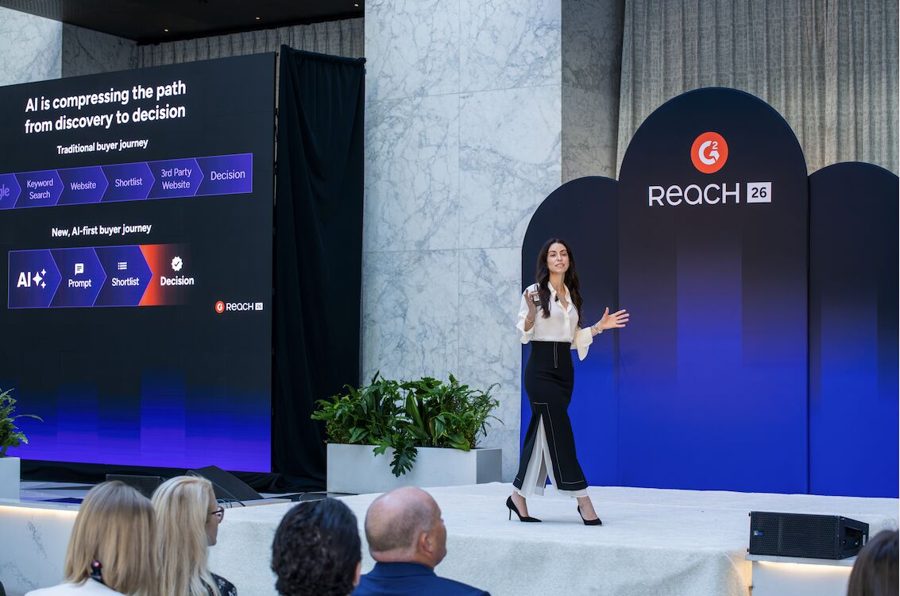
This week at Reach 2026, I got to watch six months of work show up in one afternoon: a full event built from scratch and four platforms migrated into one unified experience.
We brought G2, Capterra, Software Advice, and GetApp together as one unified platform, shipped our Q4 Innovation Drop, and hosted 200+ marketing executives at our first in-person Reach in years. Three ideas from the stage I’d want every CMO to take home:
🔍𝗠𝗲𝗮𝘀𝘂𝗿𝗲 𝗮𝗴𝗲𝗻𝘁 𝘃𝘀. 𝗵𝘂𝗺𝗮𝗻 𝘁𝗿𝗮𝗳𝗳𝗶𝗰. At G2, we now see roughly 65 agent visits for every 100 human visits. You have to market to both now, and you can’t market to what you can’t see.
📌𝗚𝗲𝘁𝘁𝗶𝗻𝗴 𝗰𝗶𝘁𝗲𝗱 𝗮𝗻𝗱 𝗴𝗲𝘁𝘁𝗶𝗻𝗴 𝗿𝗲𝗰𝗼𝗺𝗺𝗲𝗻𝗱𝗲𝗱 𝗮𝗿𝗲 𝗱𝗶𝗳𝗳𝗲𝗿𝗲𝗻𝘁 𝗼𝘂𝘁𝗰𝗼𝗺𝗲𝘀. Tim Sanders showed how LLMs cut a long list down to three, and specific, verified customer evidence is what earns a spot.
💰𝗔 𝗻𝗲𝘄 𝗰𝗮𝘁𝗲𝗴𝗼𝗿𝘆 𝗶𝘀 𝘁𝗮𝗸𝗶𝗻𝗴 𝘀𝗵𝗮𝗽𝗲. As marketers figure out how to get beyond citations and win the answer, Answer Engine Marketing (AEM) launched as its own category on G2 on Tuesday. Today the ratio of SEO to AEO spend is 40:1. That will flip, and the teams testing AEM now will have the playbook when it does.
I also enjoyed sharing the stage with Dane Vahey Head of B2B Marketing at OpenAI. His team built a real-time intelligence hub they check every day, pulling from their Slack, Gong calls, and resources like G2. The idea I keep coming back to is how he sees OpenAI’s most effective people spending their time: 20% on curiosity and hands-on building, 60% on creating, and 20% on refining taste. Skip the taste and you end up with what he called a “slop cannon.” Thank you, Dane. We kept the conversation going that night at a dinner we co-hosted with OpenAI for a room full of marketing executives.
None of this happens without the people behind it. Thank you to Godard Abel, Eric Gilpin, Tim Sanders, Alexis Zheng, Tim Handorf, Fiona Erickson and Alex David for sharing the stage, to our partners at OpenAI, Clay, Adobe Semrush, and to the G2 team that delivered Reach and our Q4 Innovation Drop on the same day.
This was OUR moment, and I’m so proud of this marketing team!
You'll never be in the meeting that decides your deal.
Somewhere after the demo, your champion is sitting with security and finance, making your case to people who've never spoken to you. And that job got harder this year. Concerns about internal resistance to AI adoption grew from 16% to 29% in a single year.
Marketing doesn't own that room, but we decide what our champion carries into it. A lot of us are still handing over a glowing testimonial and hoping. What survives a finance review is a payback number someone can check.
Eric Gilpin and I pulled five findings from 1,000+ B2B software buyers into a new GTM edition of this year's Buyer Behavior Report, 𝗪𝗵𝗮𝘁 𝗚𝗧𝗠 𝗧𝗲𝗮𝗺𝘀 𝗡𝗲𝗲𝗱 𝘁𝗼 𝗞𝗻𝗼𝘄. His advice for sales leaders, mine for CMOs.
Link in comments ⬇️
What are you handing your champions before the security review, instead of after it stalls?
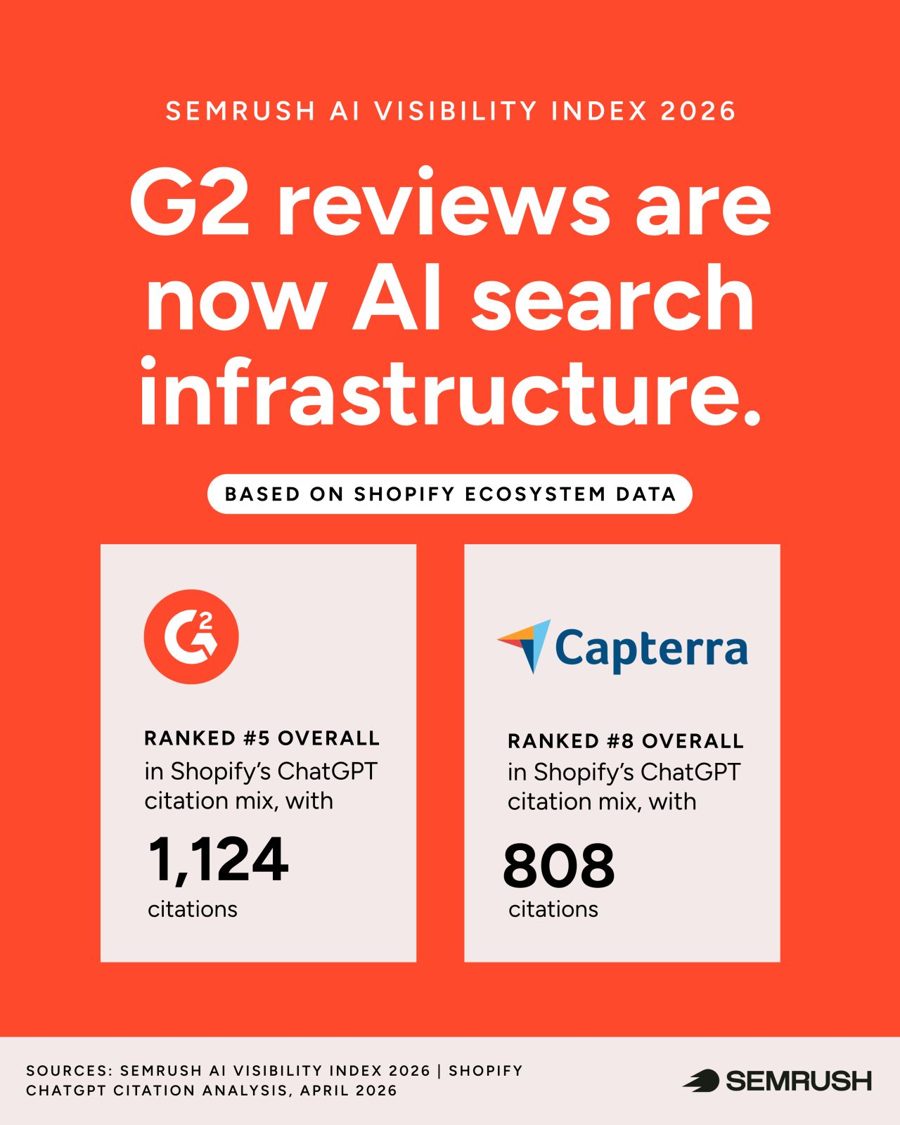
You can't pay your way into the sources AI trusts. You have to earn it over time. Semrush's new AI Visibility Index shows what that looks like at scale.
Their 2026 report analyzed Shopify's ChatGPT citation mix — the actual sources AI reaches for when buyers research software. G2 𝐫𝐚𝐧𝐤𝐞𝐝 #𝟓 𝐰𝐢𝐭𝐡 𝟏,𝟏𝟐𝟒 𝐜𝐢𝐭𝐚𝐭𝐢𝐨𝐧𝐬. Capterra 𝐫𝐚𝐧𝐤𝐞𝐝 #𝟖 𝐰𝐢𝐭𝐡 𝟖𝟎𝟖.
Semrush flagged something that stuck with me: Shopify's AI visibility would be "affected if G2 or Capterra changed review methodology." That's infrastructure language about G2.
Semrush calls it the “Citation Core”, the small group of sites AI consistently relies on within an industry. For software, G2 and Capterra serve as anchors. Their 90-day playbook for brands chasing AI visibility starts with: "Launch a first citation initiative (e.g., G2 reviews)."
The AEO gap is where deals are now decided. Mention ➡️ citation ➡️ recommendation. Most brands are stuck somewhere in the middle. The Shopify data shows what it looks like when you've built the full stack.
What's your team's current approach to earning a spot in your industry's Citation Core?
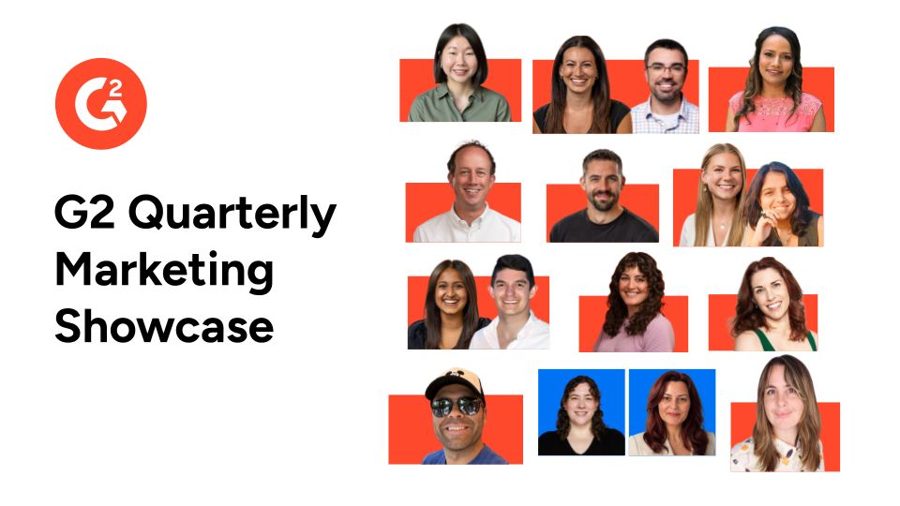
Every quarter, marketing presents insights on our work to the whole company. What sticks with folks after they leave the room is the real measure of whether it landed. This time, that showed up in the Slack messages that kept rolling in after our Q2 Marketing Showcase, from people across the company.
What surprised me wasn't the volume, it was who it came from and what they noticed. Leaders outside marketing calling out the caliber of the work, and connecting it directly to business outcomes in a way I hadn't heard before. That's usually the tell that you're building something durable, not just something loud.
What they were reacting to was a quarter's worth of real work: our Buyer Behavior Report, the G2 Community launch, our Better Together narrative, and a new YouTube series that's already showing up in the numbers. The results are real. But they're downstream of the people who built them.
I've always believed you're only as good as your team. What six months in this role has actually taught me is how to unlock more of what's already there, investing in every person, being explicit about the impact they're having on the business, and making recognition part of how we operate. It's one of the clearest ways we live our PEAK values at scale.
Beyond lucky to work alongside people like these: Yara Ohashi Jenny Gardynski Michael Wood Gayatri Shukla Palmer Houchins Phil Newton Natalie Hill Kamaljeet Kalsi Kesha Patel Riley Carr Sarah Reks Jennifer Long Mike P. Alexandria Snow (she/her) Courtney Dolecki and the entire Marketing team & welcome to our new hires Katie Robinson Natalie Fitzsimmons