Recent posts that drew 100 reactions or more and say something a peer would learn from, most reactions first. Click any post to open it on LinkedIn.
Trust is built one shared experience at a time.
This was my takeaway last week, after spending a few days with the G2 London team. It was my first trip across the pond since joining G2 in 2024.
During three days, I met with customers and spent quality time with the local sales and management team. That definitely went a long ways to "get the penny to drop" on how they could leverage me going forward.
But really, it was our common passion for the England national team that glued us all together as a unit.
For 20 years, I've loved the English team and cheer for them at major tournaments.
I even ponied up the dough to see England VS Croatia a few weeks ago at Dallas Stadium. I was there when we serenaded the team with a rendition of Wonderwall.
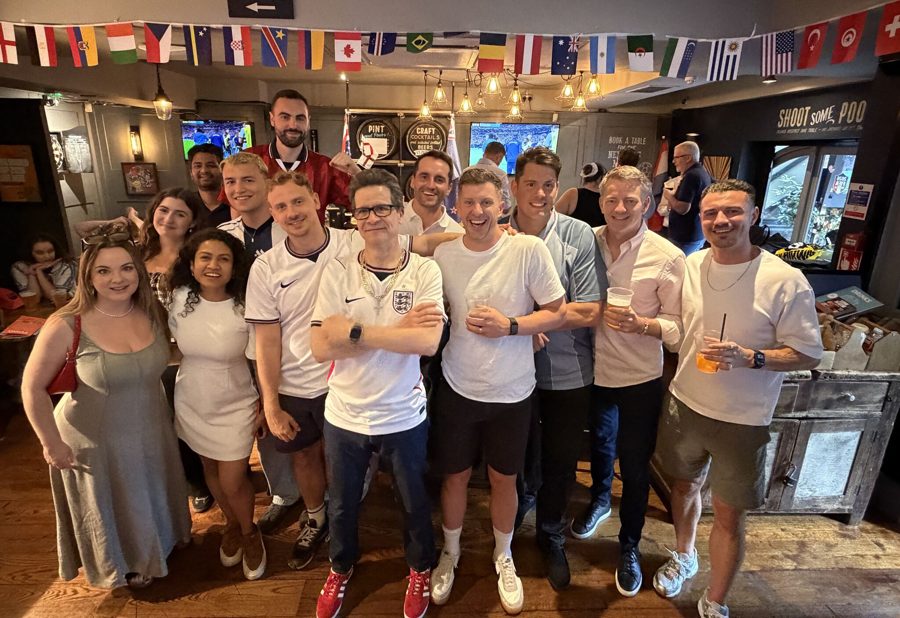
So last Wednesday, the London office joined me at a pub to watch England in a knockout round match against DR Congo.
It was a raucous experience. We were behind for a long time, finally leveled and then through the grace of Sir Harry Kane, qualified for the Round of 16 with a winning goal at the end.
It was quite the range of emotions.
We had a photo snapped of us at half-time, still uncertain if our team would win or not. I wanted to commemorate a relationship building week with the team that started all business, but ended up moving forward the most because we found a passion we could all coalesce around.
This is how I think of culture building.
Find an authentic connection between your passion and a passion of your people and you'll spark something greater than closing a deal, doing a favor or having a series of meetings.
You'll bring out real human to human connection.
I have not seen this much curiosity and FUD since 25 years ago, when the rise of the internet disrupted marketing at every level.
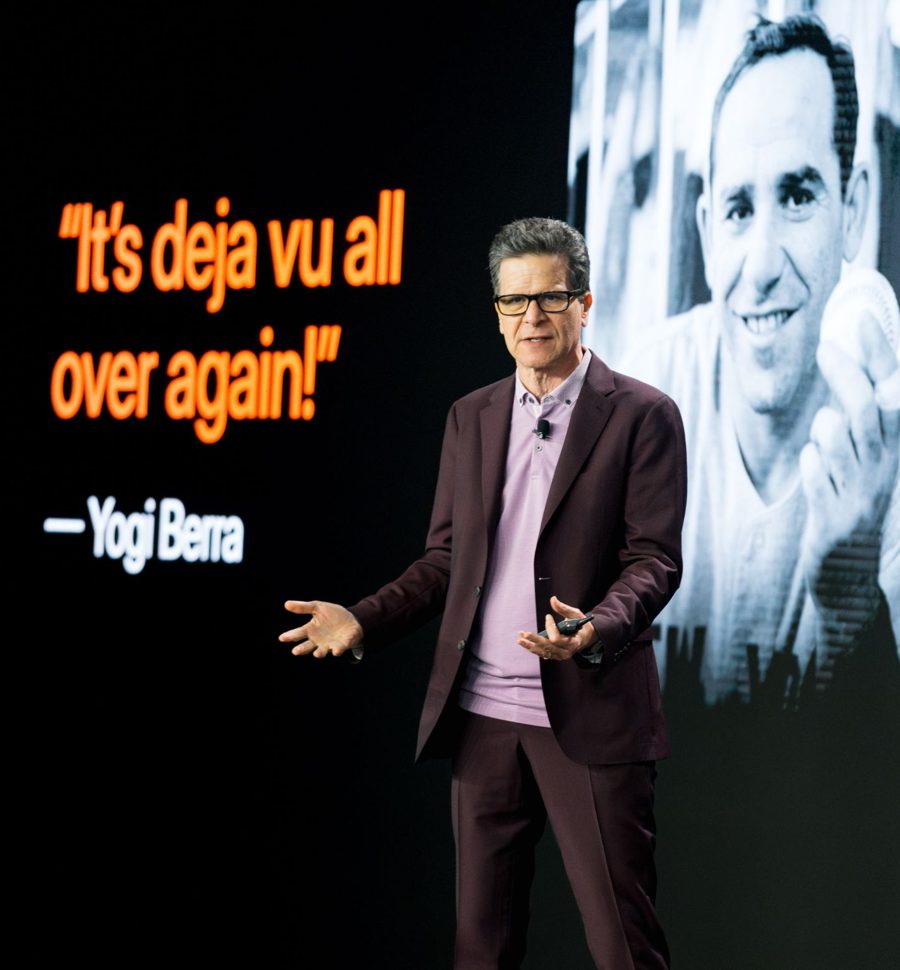
To quote the philosopher Yogi Berra: "It's deja vu all over again."
This was the opening line of my keynote last week at the Zero Click by Profound conference in NYC.
My point was that we are in a familiar place of unsettled uncertainty because of the rise of AI search. We are filled with existential angst, and at the same time, playing a guessing game of tactics.
Take the current obsession with citations. We track them relentlessly, and throw parties when they rise and lose sleep when they flatline.
But really, a citation is just a link to one of our website pages, often appearing as a tiny gray box at the end of a paragraph in a chat return, many times one of several links the user has to scroll through to click through.
Not really visibility at all. Not many clickthroughs UNLESS they are tied to a "your money, your life" AI claim that users feel the need to validate.
"Citations are the new eyeballs. And the dotcom crash was littered with companies that should have been figuring out revenue attribution instead of measuring eyeballs and hits to a page."
That line from my keynote connected with seasoned marketers, who have started to get the itch that they need to find a higher weighted success metric for AEO.
While vendors are working away on a product that could actually tell you if you won the answer (made the shortlist, won the shootout) ... you can still find heuristics to measure your content and trust signal investments today.
🧐 Have Inbound BDRs find out if the prospect found you by chat and if you were recommended.
🗺️ Ask your AEO provider to start measuring "citation position" with an emphasis on your citations that appear at the bottom of the return (where the recommendations live.)
🧠 Use CloudFlare data to measure traffic coming to your website directly from chat, especially if that traffic is seeking pricing, contact or product pages.
One other way you can do this if you are in B2B software is to measure traffic coming to your G2 profile/product page where your reviews live ... a sure sign that the citation was tied to a recommendation and not just a clever piece of content you wrote that landed you early in the return (before the recommendation.)
Much like 25 years ago, there is still a lot of nuance to how you can respond to disruption.
But what you can do, and I saw it first hand back in the day, is ask harder questions and stop accepting comfort metrics as your source of truth.
Much love to James Cadwallader, Trevor Pyle, Nick Lafferty, Eliott Lee, Katherine Underwood at Profound for inviting, me, prepping me for success and giving me the leash to close out my talk with a screed about the power of Love.
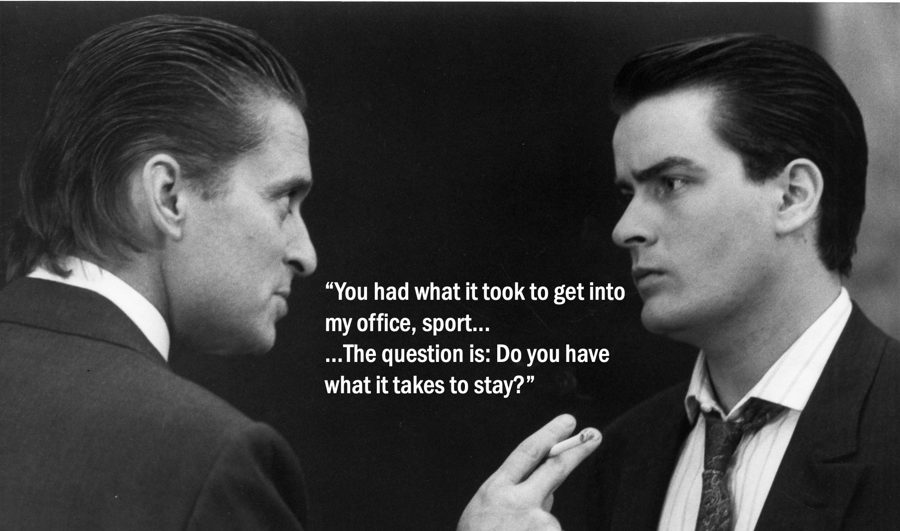
The gauntlet for winning deals in the software industry has moved from discovery (getting your foot in the door) to evaluation (lasting through the scrutiny phase).
Much like Charlie found his way into the Whale's office in the movie Wall Street, he was challenged to show that he had what it took to stay.
This is the challenge in 2026 for the software industry: Even if you solve your AI visibility and traffic problems, you still can't win deals.
Why?
As Alex David recently pointed out: You have an evidence problem.
Meaning: You need third party proof that your software is safe, high value and performative. It is not enough to just get on the radar.
This is the key finding in G2's 2026 Buyer Behavior Report (The Evaluation Maze). We surveyed software buyers and found out:
⏰ The evaluation phase is now the longest part of the buying process (thank you AI search).
🙀 49% of buyers have had a deal vetoed at the finish line by the CFO.
🥶 75% of buyers (and their finance teams) expect ROI for AI products within 6 months ... and finance is getting involved almost half the time.
And this is just the tip of the insight-iceberg. Download this free report (link ⬇️ ) and find out how you can recalibrate for this new landscape. There is useful advice for you to gain evidence, overcome objections and leapfrog competitors still thinking that if they solve discovery ... they have won the race.
You never know where work friendships will take you in life.
Almost twenty five years ago, I met Eric Gilpin on a sales call. He was also a sales rep like me, and we hit it off right away.
We both had so much ambition and drive.
A few years later, he brought me in to speak to his team at an event. That rekindled our friendship, which lead to working together on countless projects over the coming years.
We developed a bond like brothers, being there for each other during the good times as well as the bad.
In early 2020, right before Covid hit, he brought me back to corporate life after being on my own for 15 years. He convinced me to join a team, and I've never looked back.
Today, I have the privilege to work for him at G2. We are climbing our next career peak together.
The thing about close relationships is that it enables candor, empathy and a treasure trove of shared stories that create deeper understandings of each other.
And it's a good thing too. If you've worked with me for any length of time, you know that I speak my mind, care too much about little things and have unrealistic expectations of others.
His hallmark line when giving me feedback at my worst is: "And I say this with 25 years of Love.....ZING." And it works every time.
Here's to more years of working with Eric.
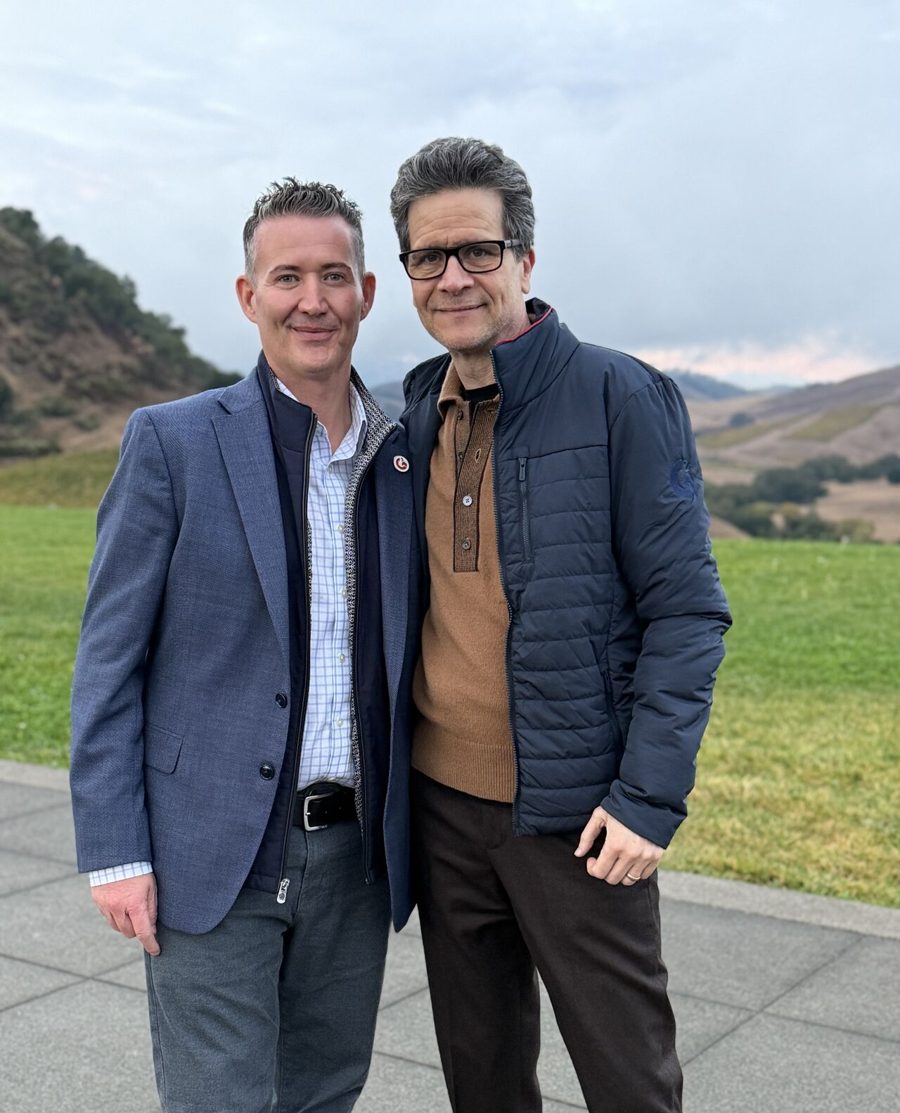
Here's the last thing you should do before you give your next big presentation:
"Think about the ONE thing you cannot forget to tell them."
This was the sage advice that Nick Morgan gave me as my speaker coach years ago.
His point was: instead of mentally running through your entire presentation, think about that one insight or prescription that will move them to action.
And that action will move them to a better place.
That's why he said, "The great speakers does not make a presentation. They give a speech to change the world."
To identify your key point to give, you have to do your research. You need to thoroughly understand the objective behind the event, why you were selected to give your talk at this particular point of the event, and where the audience is emotionally and intellectually when they walk into the room.
Because, after you've done all this research, you likely find one key point to make that fulfills the mission.
The problem is it often gets buried in a PowerPoint deck, three major sections, a collection of stories and anecdotes, and last-minute thoughts you had on the way to the event.
While they fill out the rest of your time, you won't be remembered for them.
You will be remembered for the action people take when they get home. An action they took, because you said something that resonate with them ... moved them.
Some will change their ways, others will feel validated, and some will innovate your advice into something bespoke for their situation.
You don't get invited back to speak again just because you got good ratings or even a standing ovation. That is all forgotten relatively quickly.
You are brought back because you've demonstrated you have the ability to move an audience to action.
So don't bury the lead. Protect it at all costs. Take the last five minutes before you hit the stage and remind yourself: "What point am I here to deliver? Exactly where will I say it? How will I say it?"
That's better last-minute prep than checking your email, scrolling through your slides, or getting caught up in the previous speaker's conclusion.
To read Nick Morgan's book, "Give Your Speech, Change the World," go to the comment ⬇️ for a link.

Stop looking at AI as a cost savings tool. That's a myopic perspective.
Instead, view AI as a growth lever ... a solution that increases the capacity of your team members.
This is the conclusion of McKinsey's research into LLMs a few years ago, and as time goes on, it's ringing more true every day.
This is a key point I make when I give my AI transformation keynote: "Adopt AI because you want to go faster towards your goals, not because you are trying to get leaner."
The problem with the AI cost cutting thesis lies in two areas:
1. You won't be satisfied with the machine's work as a substitute for people.
2. Even if you are, you'll find that AI is now costing more than payrolled employees to deliver production level results. (Studies are rolling in...)
Sure, some companies got a one time savings from buying AI, then cutting some heads that it (might) make redundant. But that's a short term way of thinking. And, they did this during the "Age of subsidized AI."
For a few years, we've been lulled into seeing AI as a cheaper form of talent because the the subsidized pricing frontier labs and incumbents gave us to get us to adopt it. They cannot sustain the losses of unlimited AI usage. Unlike SaaS, it is delivered with a variable cost (think fitness center VS restaurant).
Now, the days of all-you-can-eat AI plans are over.
You'll either get rated limited and then pay more than the monthly plan or you'll just pay for token use and likely be surprised with how expensive AI has become.
But at the same time, you'll see that AI is helping you tackle bottlenecks and overcome obstacles your team alone couldn't solve for. That's the value of AI. It gives your team superpowers, especially when the competition is tepid in AI adoption or agent autonomy.
You might ask, "why would we pay more than payroll for AI?"
Because you already pay a big markup when hiring contractors, so you can spin up working teams in days instead of the months it takes you to hire FTEs.
We are back in the same spot now.
If your growth plans call for high velocity output: Products getting to market on time. GTM landing at the right cadence. Customers getting answers in realtime ... you need to make AI the hub of your entire system of work.
The key is the measure the growth enabled, not the expenses saved.
By the way leaders, if you truly want to drive AI adoption, stop scaring people with the cost-cutting talk. The only way you cut costs is to let people go, and your team knows this. When you focus on AI as a capacity driver, it doesn't produce fear ... it produces excitement that you are giving them tools to help them succeed.
Link to the McKinsey study ⬇️ in the first comment.