Recent posts that drew 100 reactions or more and say something a peer would learn from, most reactions first. Click any post to open it on LinkedIn.

Henry WardCEO at Carta
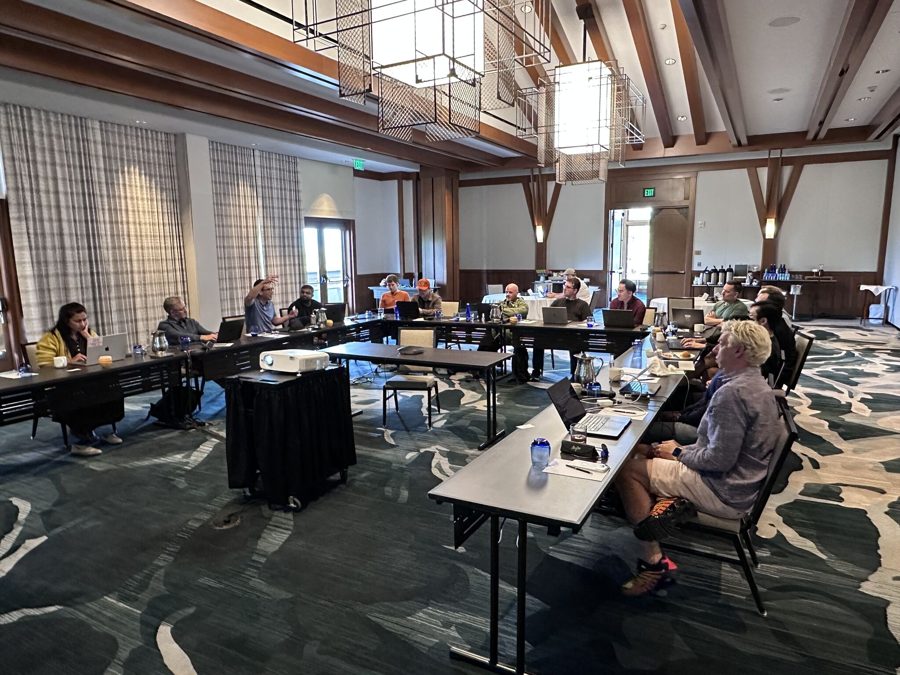
Last week, I invited a group of senior engineers shaping AI direction up to Tahoe for 3 days with only one instruction: build something ambitious with AI you wouldn't normally have time for.
One team built AI agents to run meaningful parts of fund administration autonomously, using Carta’s internal tools and CLI to investigate a case, decide what to do, and take actions such as booking a journal entry, record its reasoning, and prepare the customer response.
A second team built a software factory that can autonomously take on engineering work ranging from production bugs to larger code changes, spin up coding agents with the tools and application environments needed to implement and verify the work, and open pull requests. In one run, it migrated an entire application page to a newer frontend framework. The team has already reduced agent startup time from about 20 minutes to five or six.
A third group explored whether smaller, more tailored models could be better suited to some of our workflows. They built the infrastructure to train, serve, and evaluate them. The first models did not outperform the frontier models we use today, but we now have a repeatable way to test where this approach may make sense.
Some of this will ship soon. Some of it may not. That wasn't the point.
The point was giving three good teams 3 days and room to experiment.
Henry WardCEO at Carta
Before my first day with Friends for Youth (FFY), the trainer gave me one piece of advice: most adults talk too much. Just listen.
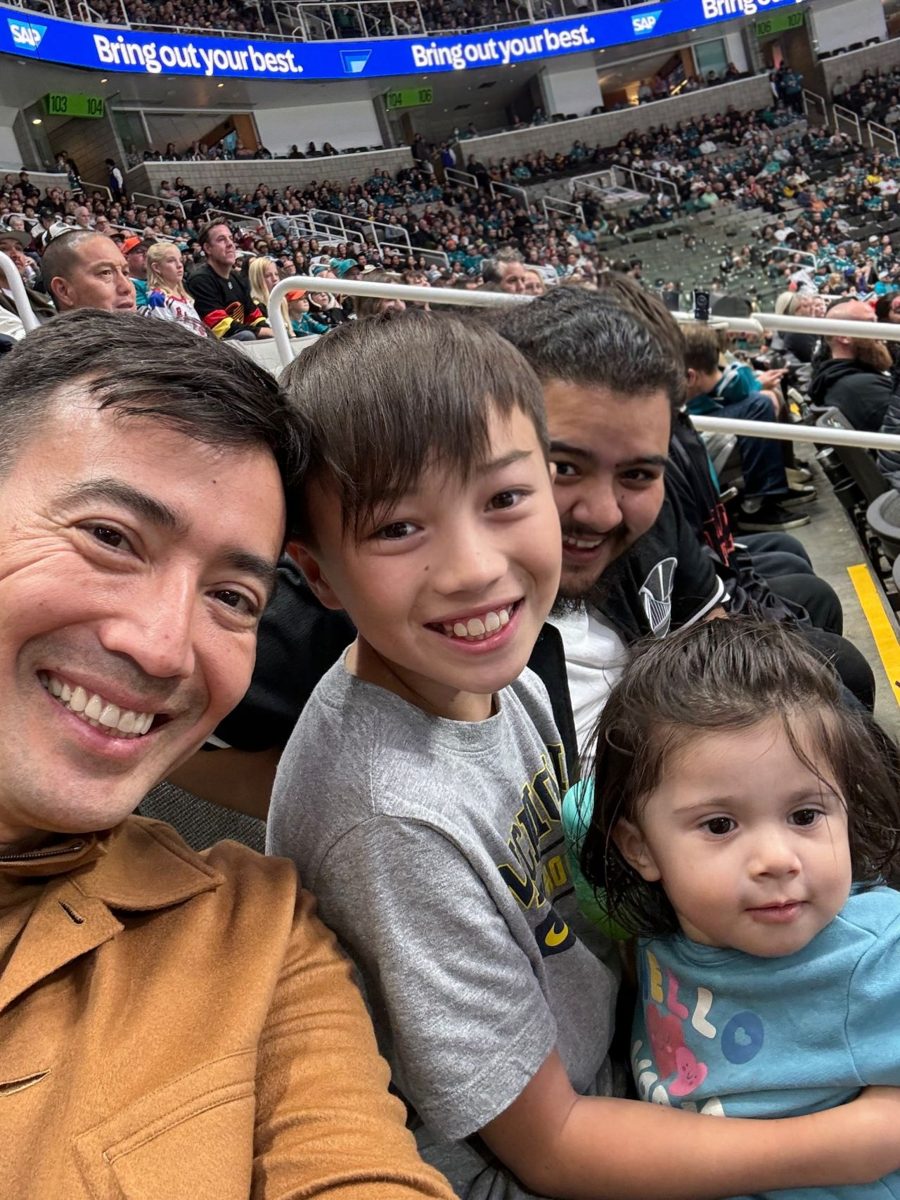
The FFY program pairs adult mentors with kids who could use another consistent person in their life. I joined 13 years ago intending to get practice being a father before my son was born. They matched me with a 13-year-old named Joevanny.
Our first outing was an hour drive to see the sea lions at Año Nuevo. Two strangers in a car, and a lot of awkward silence.
On the way home, he told me he hated school. I didn't say the things adults usually say ("stick with it, school’s important"). I just asked why, and let him talk the rest of the drive.
That became our pattern for a year. He'd bring something up — trouble at school, an unfair teacher, something at home — and I'd resist the urge to fix it or lecture him. I'd just ask a question and listen to the answer.
I've been a father for 12 years now, and a CEO longer than that. Both jobs have convinced me the trainer's advice applied to more than just connecting with teenagers. Most advice-giving is really just impatience. The people who listen longer usually understand more, and understand it faster, than the people who jumped in first.
Henry WardCEO at Carta
Why isn’t there a tender offer for LPs?
Looking at the SpaceX S-1 and realizing it may be the best example of consistent tender offer usage in history. Over the past decade, tenders have become the default liquidity mechanism for private markets.
Why? The tender offer solves three structural problems vs the standard bilateral secondary:
- Discovery: In a bilateral, the buyer and seller have to find each other. In a tender offer, the company already knows every shareholder. There's no search.
- Price: In a bilateral, different sellers negotiate different prices. One shareholder gets $10/share, another gets $8. In a tender offer, everyone transacts at the same price. No one feels like they got a worse deal than someone else.
- Optionality: No one is forced to sell. The company sets the price and the terms. Shareholders decide for themselves whether to participate. There's no drag-along.
LPs in private funds have no equivalent mechanism.
If an LP wants liquidity before a fund winds down, they have to find a buyer themselves, negotiate a price bilaterally, and get GP consent. Additionally mid-fund LP transfers are a complex accounting problem. Each LP has a unique capital account — contributions made, distributions received, carry accruals. Recalculating those by hand, for every LP, at scale, is the same kind of problem that made cap table tender offers impractical before 2012. Because of this, most LPs don’t bother.
What could an LP tender offer look like?
A secondary buyer offers to purchase LP interests in a fund — say, $30M of positions in a $100M NAV fund. The GP notifies all LPs. Each LP decides independently: sell their full position, sell a portion, or hold. Everyone who sells transacts at the same price.
The underlying portfolio is untouched. No asset sales. No marks. Just an LP-level transfer.
GPs can set their own terms. Require full-position sales only to reduce LP count. Condition participation on a commitment to the next fund — turning illiquid LP capital into a soft circle for Fund II. The tender offer becomes a fund management tool, not just a liquidity event.
We’re working on solving this problem. If you're a GP interested in being an early partner, reach out. We'd love to build this with you.
Henry WardCEO at Carta
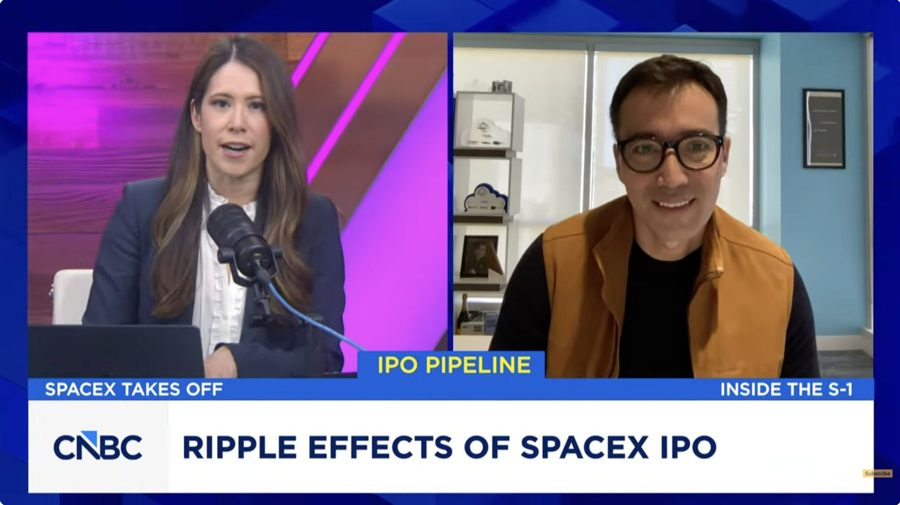
Everyone's focused on SpaceX's valuation. The more interesting question is what happens to the rest of tech when the IPO actually happens.
Here's the dynamic: investors need dry powder to participate in SpaceX, OpenAI, and Anthropic IPOs. So they've been selling. Tech has been under pressure partly because of the AI replacement narrative — and partly because capital is being repositioned.
When those IPOs close, one of two things happens. Investors get their allocations, deploy, done. Or the retail bid drives prices too high, they can't get in at the size they wanted, and they're sitting on dry powder with nowhere to put it.
That capital has to go somewhere. And a lot of good, solid businesses just got cheaper. Time will tell whether things stay that way. Loved chatting with CNBC about all of the above!
https://lnkd.in/g7kZRn8M
Henry WardCEO at Carta
For the last two years, everyone's been comparing AI to the cloud.
Wrong analogy. Completely wrong. And it's causing people to build the wrong things.
Here's what's actually happening.
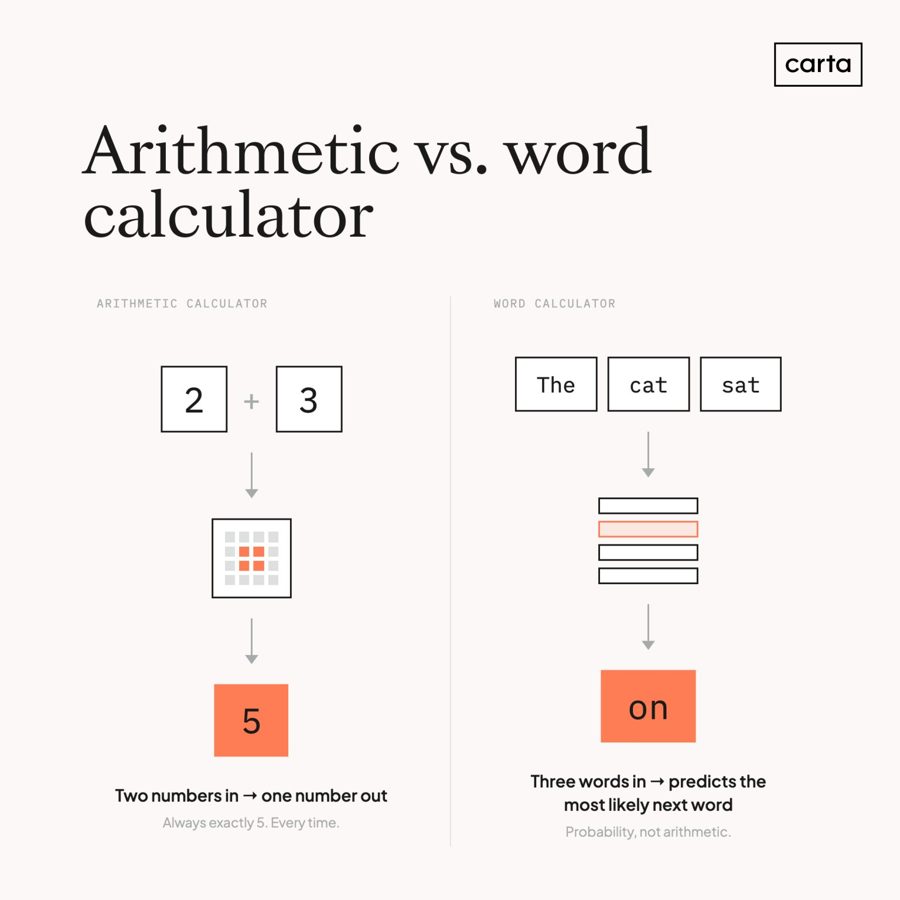
For 50 years, computers ran on one architecture. The x86 chip. All it does is take two numbers and give you a third. Load, retrieve, add, subtract. That's it. Everything we built — the internet, iPhones, self-driving cars, TikTok — ran on an addition calculator.
AI is a new chip. Same concept, different input. Instead of taking two numbers and returning a third, it takes words and returns the next word. That's all it does. A word calculator.
Once you understand that, everything else follows.
The word calculator is really only good at two things: figuring out what tool to call, and explaining it. It can't do math. Don't ask it to. If you need an Excel calculation, use the word calculator to write the Python script that does the math. Then run the math on the math chip.
Most AI mistakes I’ve seen come from one of two places: asking the word calculator to do arithmetic, or trying to run an agent like an N8N workflow — step 1, step 2, step 3. That's not how it works. Agents aren't workflows. They're loops. Give it an objective. Tell it how it knows it's done. Then let it go.
If you don't understand the word calculator, you can't build on it.
Henry WardCEO at Carta
My friend Jonathon, at Ludlow Ventures, sent me a scenario planning tool he'd built using the Carta Investors plugin. He'd wired his own fund data in so he didn't have to ask his team every time he wanted to move a valuation and see what happened downstream. I looked at it and thought we should ship this to everyone.
So we did. We call it a micro app. Fund modeling is the first one.
You invoke it like any skill — Carta Investors plugin, Carta fund modeling, your firm name — inside Claude Code. It spins up a local React app that pulls your actual fund admin data: funds, entities, cap tables. Move a company's valuation and watch the LP returns, the carry pool, the reserves math recalculate. You can run a dry powder analysis. Ask it what you'd need to believe to hit a 6x. Then ask Claude to add a sector breakdown mid-session, because it's your app now, not ours.
The best part is you own the app and can change it how you want. Customize styling, business logic or enrich it with other data you have in Claude.
There's also no onboarding or implementation call needed for this. The data's already sitting in Carta, so you pull it straight into the app.
We keep building these because customers keep building them first and showing us.