The most reacted recent post at each company, in full. Click any post to open it on LinkedIn.
I took a break from paying attention to AI this summer. I thought I’d feel left behind when I came back. But coming back, I realized not that much had changed. There are new models, new techniques, new agents.
But making great products, growing revenue, and building a business is still hard.
The tools are clearly getting better. We can do more, faster. But I think the more important question is whether we’re making better things. Are our teams getting better, or are we just getting faster?I don’t think the answer is clearly yes.
There’s a lot of focus on making tools, using tools, and building systems around them. But as product people, our job is still to make something great.

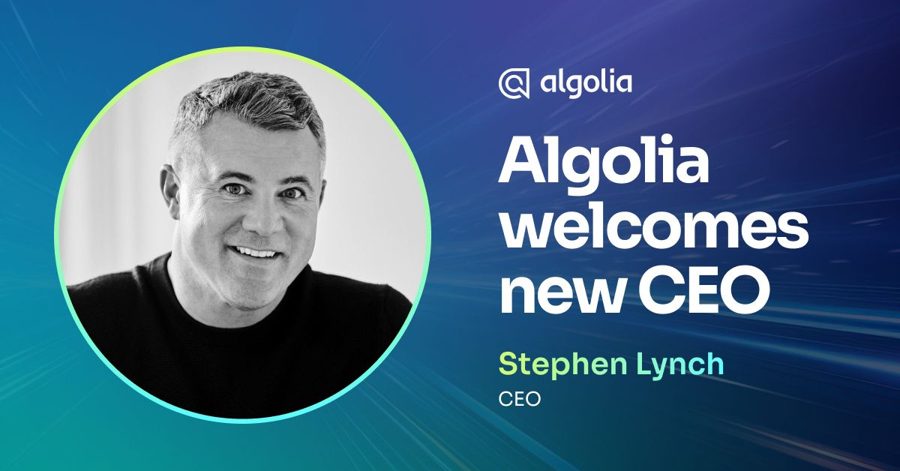
I’m excited to share that I’m joining Algolia as CEO.
What drew me here is both the strength of the foundation & the significance of this moment. Algolia has become critical infrastructure for the modern internet – powering more than 2 trillion searches annually with exceptional speed, reliability & developer trust. That level of impact is only possible with world-class engineering, sharp product intuition & a deep commitment to performance.
At the same time – search is evolving. We’re moving from a world where users search to one where agents decide. From interfaces to orchestration layers. From results to outcomes.
In that shift, retrieval is no longer just a feature – it becomes the memory layer for intelligent systems. That’s the opportunity ahead for Algolia.
I’m looking forward to learning from and serving our 18,000+ customers across a wide range of industries & use cases.
To the Algolia team – I’ve been deeply impressed by what you’ve built. I’m excited to work alongside you as we define what comes next.
Let’s get to work. 💪

Anthropic building its own source control is a sign of what’s coming: agent-scale development will force us to rethink parts of the software lifecycle we’ve treated as settled.
My view is that the unit of autonomy has to become larger than a coding task. An agent that writes a change and hands it off has automated one step. A software factory has to carry that change through integration, testing and release, and use failures to improve the next attempt.
The difficult part is the interaction between changes. Two changes can each pass their tests and still fail together. A passing test result is evidence about a particular version, not every version that comes after it. As more agents work in parallel, keeping that evidence connected to what actually ships becomes a much bigger engineering problem.
That’s why I wouldn’t measure a software factory by how many agents it runs or how much code they generate. I’d measure how much work reaches production correctly, how often engineers have to step in to fix or unblock the work, and how quickly the system recovers when it gets something wrong.
Faster coding is valuable. The bigger leap is making the entire system capable of absorbing it.
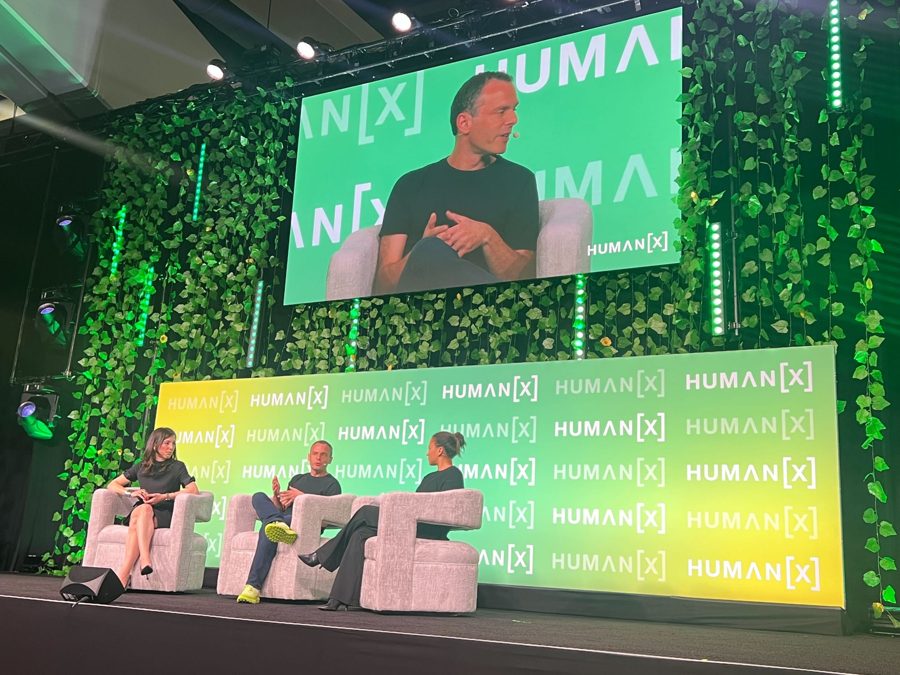
Great to be at #HumanX last week and enjoyed my conversation with Eléonore Crespo from Pigment. We talked about AI agents in production. One thing we learned at Datadog: even when an agent works perfectly, it surfaces problems that weren't obvious before. You have to keep measuring. AI doesn't remove that need, it increases it.
Joe McManusChief Information Security Officer at Grafana Labs 🚨 We recently discovered that an unauthorized party obtained a token with access to the Grafana Labs GitHub environment, enabling the threat actor to download our codebase.
Our investigation has determined that no customer data or personal information was accessed during this incident, and we have found no evidence of impact to customer systems or operations.
We immediately initiated forensic analysis and we believe we’ve identified the source of the credential leak. We have since invalidated the compromised credentials and implemented additional security measures to further secure our environment against unauthorized access.
The attacker attempted to blackmail us, demanding payment to prevent the release of our codebase.
Based on our operational experience and the published stance of the Federal Bureau of Investigation, which notes that "paying a ransom doesn't guarantee you or your organization will get any data back" and only "offers an incentive for others to get involved in this type of illegal activity," we have determined the appropriate path forward is to not pay the ransom.
As part of Grafana Labs’ standard security practices, we will share additional information from our post-incident review when our investigations are complete.

Today has been a very sad day. The world lost an incredible woman: Elizabeth Pinkham.
I worked under her leadership for many years. I wasn’t one of the people closest to her, and so many people knew her in ways I didn’t. But I realized today just how many EP stories I have, and how many little pieces of her have stayed with me.
Early in my career, EP terrified me a little. Okay, maybe more than a little. She was part of an era of leadership with incredibly high standards. She was particular, demanding and fearless. At the time, I’m not sure I always appreciated it. But with many more years of leadership under my own belt, I look back and realize how much she pushed all of us to be better.
And then there was this wonderfully sweet side of her that you got a glimpse of. She once sent me an enormous cement planter filled with orchids that was so beautiful and so completely impractical that I remember wondering how the hell I was going to get it home, let alone keep it alive. When I had my first child and was staring down a daycare waitlist of more than a year, EP helped me get in.
Today is my kids’ last day at Little Ohana. All four of my children have gone there. It’s a place EP herself helped create when she led real estate. The fact that today, of all days, closes that chapter for our family feels almost impossible to process.
EP also had insane taste. Art, fashion, interiors, everything. Just seeing what she wore to work could be a highlight of the day. I remember when she invited our team to her loft and being completely in awe of how she lived. Of course her home was as interesting and particular and beautiful as she was.
Later, she brought that point of view to Forager in Healdsburg with my friend KGR. And somehow, in another coincidence that feels both beautiful and heartbreaking, Forager celebrates its fifth anniversary today.
EP fought cancer harder than anyone I’ve ever known. She was fearless in so many parts of her life, and she brought that same ferocity to the fight.
I keep thinking today about how strange legacy is. The companies you helped build, the people you led, the businesses you created. But it’s also the incredibly specific, seemingly small things that are more impactful.
Maybe one of the gifts of getting older is being able to look back at the people who shaped you early in your career and understand them differently. I understand EP differently now. I understand the standards. The particularity. The push to be better. And I’m incredibly grateful I got to experience all of it, and her.
My heart is especially with EP’s family and her closest friends right now. You were the lucky ones who got to be in her presence most, who knew the parts of her the rest of us only occasionally got to glimpse. I hope you know how far her impact traveled and how many of us are carrying little pieces of her with us.
EP, you left fingerprints on my life in places I’m only now realizing were yours. I’m forever grateful. RIP.

Vinay KumarChief Product and Technology Officer at DigitalOcean Yesterday we launched Managed Agents on DigitalOcean in a private preview. I want to put it in the context of a conviction I've held for a while.
The first generation of clouds was built compute-first. AWS started with EC2, and everything else — storage, networking, databases, even AI services — layered on top. That architecture won the last twenty years.
I fundamentally believe the new AI-native cloud starts token-first. Everything else, including "compute", is a means to enhance the intelligence generated by tokens. Agents are the new interface to the cloud — one that brings tokens and microVMs together under a single abstraction.
DigitalOcean's Managed Agents Runtime Services (M.A.R.S.) is the first full expression of that construct, and it stands on four fundamental services we've been building deliberately:
Serverless inference — tokens on tap. You consume tokens the way you consume bandwidth. No model hosting, no GPU capacity planning, no idle spend. The meter runs only when your agent thinks.
Firecracker microVM compute — every agent session runs in its own hardware-isolated microVM, starting in under a second and scaling to zero. It's the right compute unit for software that works in bursts rather than runs forever.
Durable sessions — agents that outlive your laptop. Pause and resume in as little as 200 milliseconds with files, processes, and working state intact. Continue from another device, hand off mid-task to a teammate, or fan out to parallel agents without multiplying infrastructure.
Action Gateway — governed access to the outside world. Agents reach GitHub, Jira, Notion, Linear, and Postgres through centrally managed authentication, permissions, human approvals, and audit controls. OAuth credentials are brokered through Secrets Manager and never exposed to the model or the execution environment.
You describe the agent — its harness, tools, and guardrails. Bring Claude Code, Codex CLI, OpenCode, or agents built on LangGraph and CrewAI. No proprietary framework, no lock-in. We run the tokens and the compute underneath.
If you're wondering what to build first, here are ideas you can ship in a weekend:
- A support agent grounded in your docs and past tickets that escalates only what it can't resolve
- A code-review agent that runs on every pull request with full repo context, safely isolated in its own microVM
- A data agent that turns plain-English questions into queries against your managed database
- An ops agent that watches alerts, triages incidents, and drafts the runbook update before you're paged
- A back-office agent that reconciles invoices, chases renewals, and processes intake forms overnight
This is where our cloud investment is going: a next-generation cloud construct built for AI natives, token-first from the ground up.
Request access here: https://lnkd.in/es8gwYnp. And tell me what you'd build.
#DigitalOcean #agents #tokens #microVMs

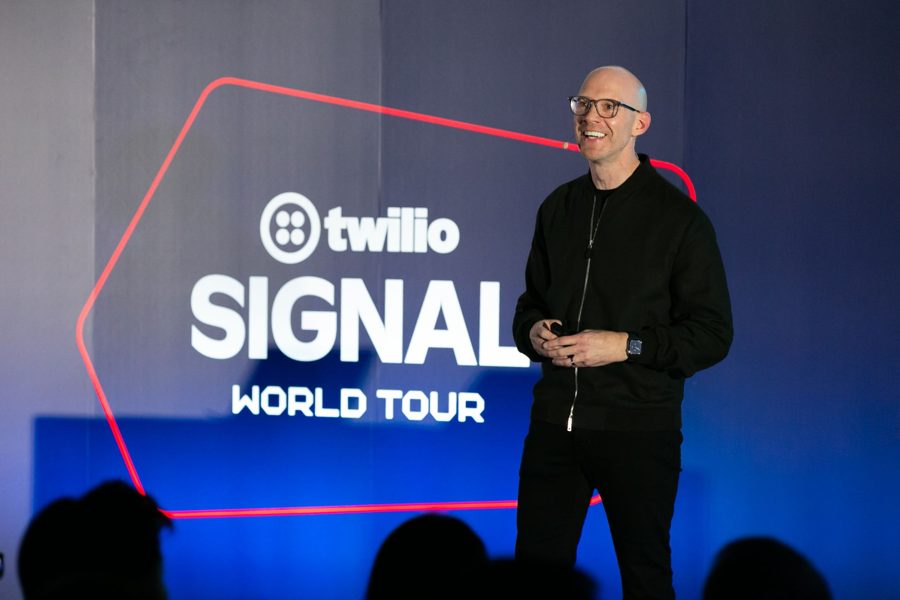
Twilio just wrapped up SIGNAL Singapore and it’s clearer than ever, this is where Asia’s customer engagement playbook is written.
I had the privilege of sharing the stage with two incredible leaders who are building the future of smart, connected experiences for their customers.
PAUL-ERIC LICARI from Grab broke down how this super-app embraces building for a highly diverse Southeast Asian population. They standardize core platform capabilities while localizing the things that reflect real differences in infrastructure and solve unique problems by region.
Chew Lip Ng from National University Health System shared how they are transforming chronic care for Singapore’s super-aged society. By meeting patients where they are on WhatsApp, NUHS supports them not only during visits but in the 364 days between, enabling care providers to detect trends and risks earlier.
Every AI agent needs the same fundamental foundation developers have relied on for years: scalable infrastructure to communicate, verify identity, and take real-time action. Intelligence alone isn’t enough if it forgets who you are the moment you change channels.
The next generation of AI experience belongs to us - the builders who connect intelligence directly with real-world context and trusted infrastructure.
Thank you to our team, partners, customers, and the builders across APJ who are setting the benchmark for what’s next.

Simon WistowCo-Founder. VP of Strategic Initiatives at Fastly It blows my mind that it's been 15 years. Not only is it by far the longest job I've had - it's actually longer than I've lived in most countries.
It was a scary thing to do - I'd joined Zendesk as employee ~30 and it was a rocket ship at the time but it was also a great place to work. Leaving to start Fastly meant a lot of uncertainty around lots of things, not least my visa. Was it going to succeed? Was this a dumb idea?
The thing that really drove us (I fully recommend frustration driven development as a motivator) was that, at the time, the status quo for CDNs was awful - XML config files, endless Professional Service engagements to do the simplest things, 6-8 hour deploy times, no purging, logs that were FTP'd (!!!) to you once every 24 hours. We were absolutely certain that there HAD to be a better way. Our friends in the DevOps community told us it was great idea ...
... but there's always that creeping doubt. Why has no-one else done this? How can we possibly go up against an 800lb gorilla?
In our original plans - written on the windows of mine and Artur Bergman's apartment and scribbled on pages of a notebook and the back of place settings at Brickhouse Cafe before work started - we had some stretch goals which were, in no particular order, to have our own User Conference, to sponsor an F1 team (I do remember that Artur commented just after we got our first round of funding that technically it wasn't even enough to buy a Bugatti Veyron) and to go Public. Amazingly, we achieved all those things right about on schedule.
But deep down I would have been happy just to not embarrass ourselves, to get some customers who weren't just people we knew and, stretch goal, change the way the CDN industry worked.
So I'm pretty chuffed at where we are.
And what's even better is that it feels like things are kicking in another gear. It's a exciting, turbulent time for tech and I'm really excited to see what the company will do for the next 15 years.
And a huge shout to the people who were around in those early days as employees, as advisers, as early customers who took a risk or even just those who took us out for a drink to vent some times - Jesse Robbins, Gil Penchina, Amy Hammond, Ryan Richards, Rogier Mulhuijzen, Vladimir Vuksan, Alan Kasindorf, Vicky Colombo, David Recordon, Kristina K.A.N. Braarvig, Sarah Sandnes, Anne Reidun Kjesbu, Cliff Moon and so, so, so many more.